Pioneering -
Innovative -
Creative


QTSC9, Quang Trung Software City, Trung My Tay Ward, Ho Chi Minh City, Vietnam


Native App vs Cross-Platform App: Which Technology Should You Choose?
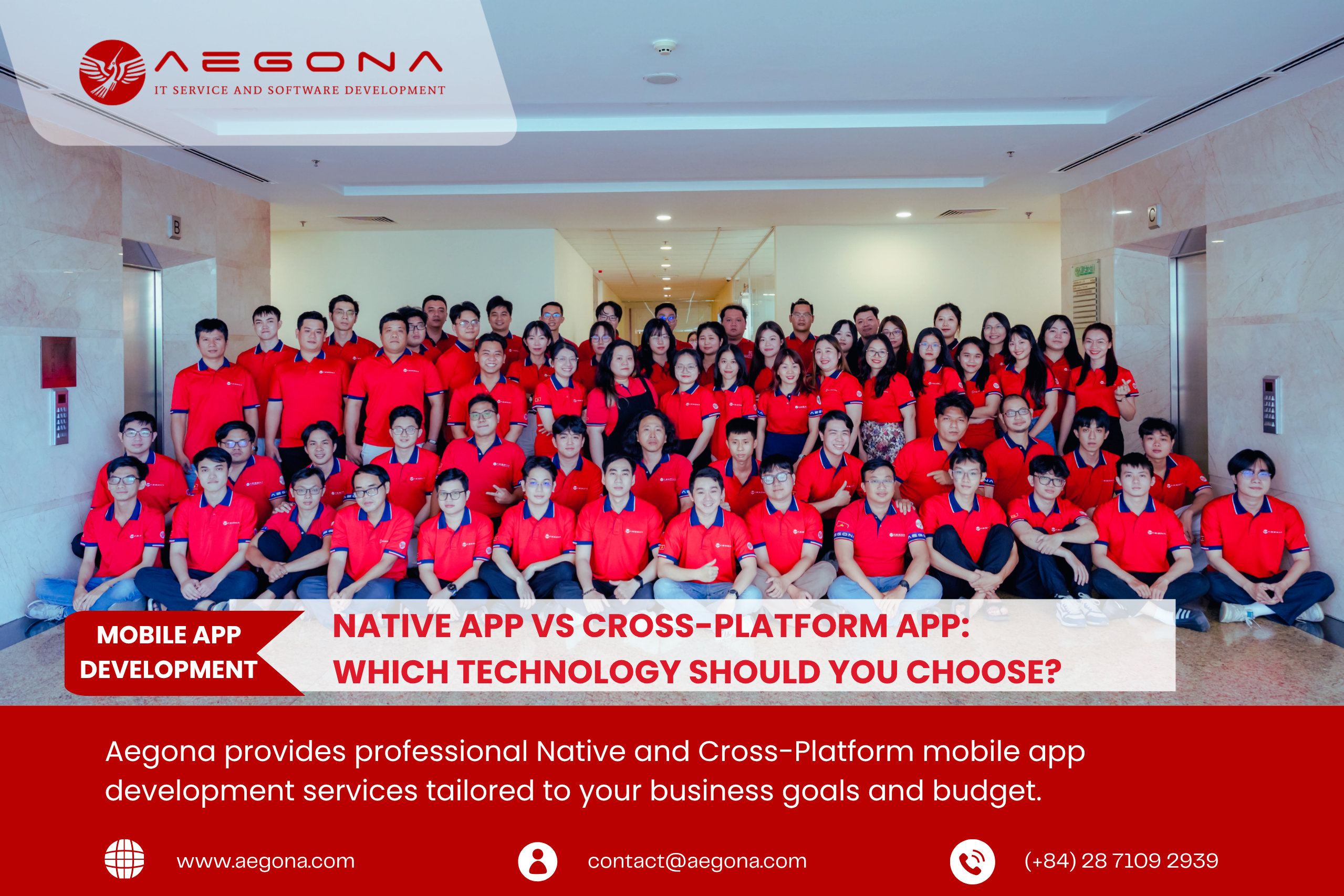
Before developing a mobile application, one of the biggest challenges businesses face is choosing the right technology platform: Should they build a Native App or a Cross-Platform App? Each solution comes with its own strengths in terms of performance, cost, and development time. In this article, Aegona will provide a detailed comparison of these two technologies to help businesses make the most suitable investment decision for their business model.
Mobile applications have become a key touchpoint between businesses and their customers. From e-commerce and healthcare to education and logistics, organizations across industries are leveraging mobile solutions to improve user engagement and streamline operations. As the demand for mobile apps continues to grow, choosing the right development approach becomes a crucial part of any successful Mobile App Development Service. Among the available options, Native and Cross-Platform development stand out as the two most widely adopted technologies. But which one is the right fit for your project? Let's explore the differences and find out.
Basic Concepts: What Are Native Apps and Cross-Platform Apps?
What is a Native App?
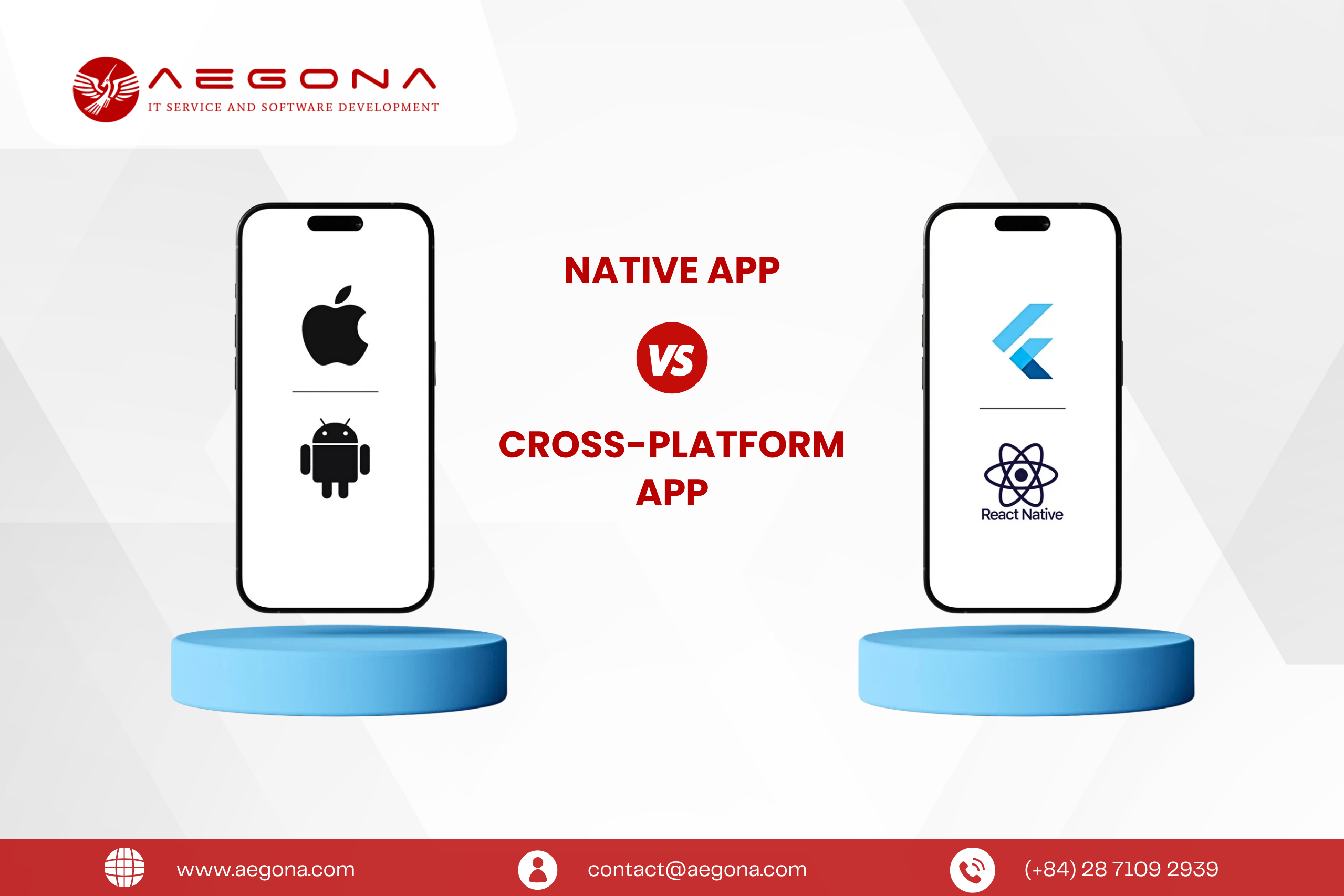
A Native App is a mobile application developed specifically for a single operating system, such as iOS or Android, using the platform’s dedicated programming languages and tools. For example:
- iOS applications are typically built using Swift or Objective-C with Xcode.
- Android applications are developed using Kotlin or Java with Android Studio.
Because Native Apps are optimized directly for each operating system, they usually deliver higher performance, faster processing speeds, and smoother user experiences.
What is a Cross-Platform App?
A Cross-Platform App is an application developed from a single codebase that can run on multiple platforms such as iOS and Android. Popular frameworks today include Flutter and React Native.
This approach helps businesses reduce development costs, shorten development time, and maintain feature consistency across platforms. Cross-Platform Apps are especially suitable for startups or businesses that need to launch applications quickly with optimized budgets.
>>>Read more: Flutter - A Breakthrough in cross-platform app development
Detailed Comparison Between Native Apps and Cross-Platform Apps
1. Performance and Processing Speed
Native Apps Have the Advantage
Since Native Apps communicate directly with the device hardware without relying on an intermediate translation layer, they can handle heavy tasks and complex animations smoothly without lag.
Cross-Platform Apps
Thanks to the rapid advancement of Flutter and React Native, modern Cross-Platform Apps can now achieve performance levels very close to Native Apps. Most users can hardly notice the difference unless the app involves intensive 3D graphics or highly complex algorithms.
2. Investment Cost and Time-to-Market
Cross-Platform Apps Take the Lead
This is one of the biggest reasons why startups and SMEs prefer this technology. Instead of hiring two separate development teams (one for Swift/iOS and another for Kotlin/Android), businesses only need one team.
With a single codebase, the app can be released simultaneously on both app stores, helping businesses shorten time-to-market and capture opportunities faster.
Native Apps Require More Resources
Development costs are significantly higher because businesses need separate development, testing, and maintenance processes for each platform.
3. Maintenance, Upgrades, and Scalability
Cross-Platform Apps
When fixing bugs or updating common features, developers only need to modify one codebase. However, there is one limitation: whenever Apple or Google introduces new hardware features, businesses may need to wait for third-party libraries to support those features before integrating them into their apps.
Native Apps
Maintenance requires more effort because updates must be implemented separately on both platforms. However, Native Apps can immediately take advantage of the latest operating system features without any dependency limitations.
>>>Read more: Mobile App Development Service in Vietnam – Cost-Effective Solutions
Comparison Table: Native App vs Cross-Platform App
Criteria | Native App | Cross-Platform App |
Codebase | Separate codebase for each platform | Single shared codebase |
Technologies | Swift, Objective-C, Kotlin, Java | Flutter (Dart), React Native (JavaScript) |
Performance | Maximum performance and responsiveness | Very good (around 90–95% of Native performance) |
Development Time | Longer | Faster by 30–50% |
Development Cost | Higher | More budget-friendly |
UI/UX | Fully optimized for each platform | Consistent design across platforms |
Hardware Access | Full access to device hardware | Depends on third-party plugins |
Maintenance | More complex | Easier and faster |
Should You Choose Native App or Cross-Platform App?
There is no “best” technology — only the most suitable one depending on your business model, budget, and strategic goals.
Choose Native App When:
- Your app requires high performance
- You need smooth and optimized user experiences
- The app includes:
- Fintech or banking features
- Mobile gaming
- AI or AR/VR technologies
- Livestreaming or real-time systems
- Large-scale user traffic
Although Native Apps require higher investment and longer development time, they provide excellent stability and long-term scalability.
Choose Cross-Platform App When:
- You want to optimize development costs
- You need to launch quickly
- Your application is:
- An MVP for startups
- An eCommerce app
- A loyalty app
- A booking app
- An internal CRM
- A business management application
With a single codebase for both iOS and Android, businesses can significantly reduce development and maintenance costs.
>>>Read more: MVP Software Development: Launch Fast, Validate Quickly, and Save Costs
3 Simple Questions to Help You Decide
If you are still unsure, answer these three important questions:
1. Where are your customers?
If your users are on both iOS and Android but your budget only allows one Native version, Cross-Platform is the smarter choice to reach all potential customers.
2. What is your app’s core feature?
Does your app heavily rely on device hardware? If your app mainly focuses on browsing products, shopping, loyalty points, or messaging, Cross-Platform is often sufficient.
3. How much time and budget do you have?
- If you need to launch within 2–3 months with a limited budget, choose Cross-Platform.
- If you have a long-term plan (6–12 months) and a larger budget, Native App is a better long-term investment.
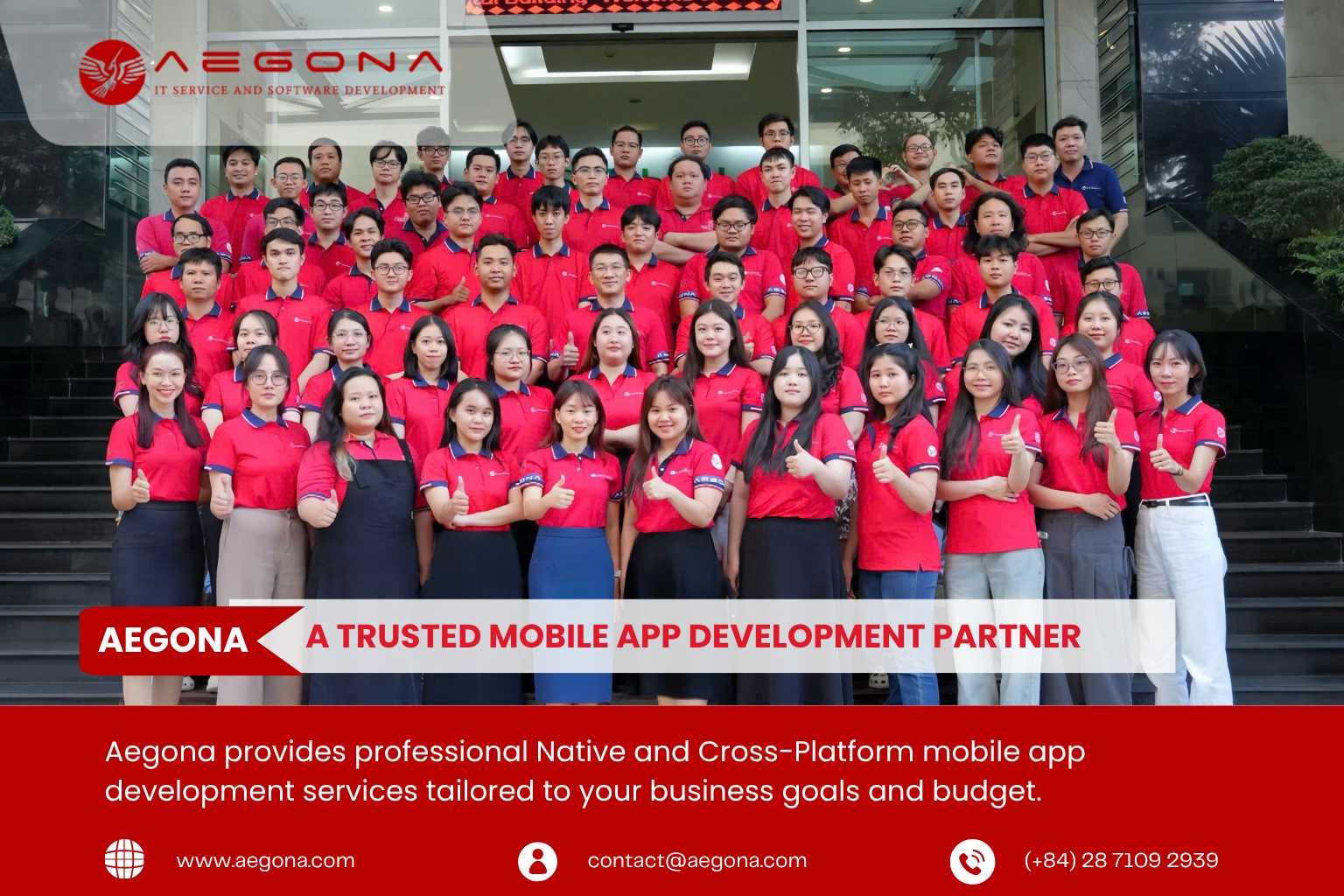
Aegona – A Trusted Mobile App Development Partner
With years of experience in software development, Aegona provides professional mobile app development services for businesses in various industries, including retail, eCommerce, education, logistics, manufacturing, and enterprise management.
Aegona supports both Native App and Cross-Platform App development, helping businesses choose the right technology based on their goals, budget, and future scalability plans.
Our experienced development team focuses on:
- Optimizing application performance
- Delivering modern UI/UX design
- Ensuring stability and security
- Building scalable and maintainable systems
Contact Aegona today for expert consultation on the best mobile app solution for your business.
>>>Read more: Top Vietnam app developers software outsourcing and development worldwide
FAQ – Frequently Asked Questions
Are Cross-Platform Apps (Flutter/React Native) secure?
Yes. Modern Cross-Platform Apps can fully meet strict security standards through data encryption, code obfuscation, and SSL certificates.
Can I migrate from a Cross-Platform App to a Native App later?
Yes, but the application will need to be rebuilt from scratch because the technologies use completely different programming languages and architectures.
Does Aegona support App Store and Google Play publishing?
Yes. Aegona assists businesses in preparing applications according to Apple and Google’s latest review guidelines to ensure successful publishing.
Conclusion
Both Native Apps and Cross-Platform Apps have their own advantages and are suitable for different business goals and development strategies. If you are looking for a professional mobile app development partner, contact Aegona for expert consultation and the most suitable solution for your business.
___________
AEGONA LTD — IT Service & Software Development
[E] [email protected]
[P] 028 7109 2939 (08:00 – 17:00, Mon – Fri)
[M] 0914 518 869 | 0869 731 689
[W] www.aegona.vn I www.aegona.com
[Zalo] https://bit.ly/41UeXrx
[A] Orbital Building (QTSC Building 9), Quang Trung Software City, Ho Chi Minh City, Vietnam
related post

Discover TourFlow, tour management software for travel agencies to organize customer data, manage tour products and departures, and track bookings.

OpenAI Ads brings a new advertising opportunity to ChatGPT. Explore how ChatGPT Ads work and what businesses should know about advertising in the AI era.
Shopify website design and development tailored to your business, with custom themes, integrations, features, and maintenance.
AEO vs OpenAI Ads: discover the difference between AI Search optimization and ChatGPT advertising, and what businesses should consider in the AI era.

Custom PoC/MVP development services by Aegona to validate software ideas, reduce development risks, and build scalable solutions for your business.
Explore Aegona’s MCP Server Development Services to connect AI and AI Agents with ERP, CRM, databases, APIs, and enterprise systems for smarter automation.

Scale your development team with Aegona’s Staff Augmentation Services. Hire skilled Java, PHP, Fullstack Developers in Vietnam for your projects.
AEGONA provides Odoo ODC services with flexible models, including Dedicated Odoo Developer, Dedicated Odoo Team, and Full Odoo ODC.
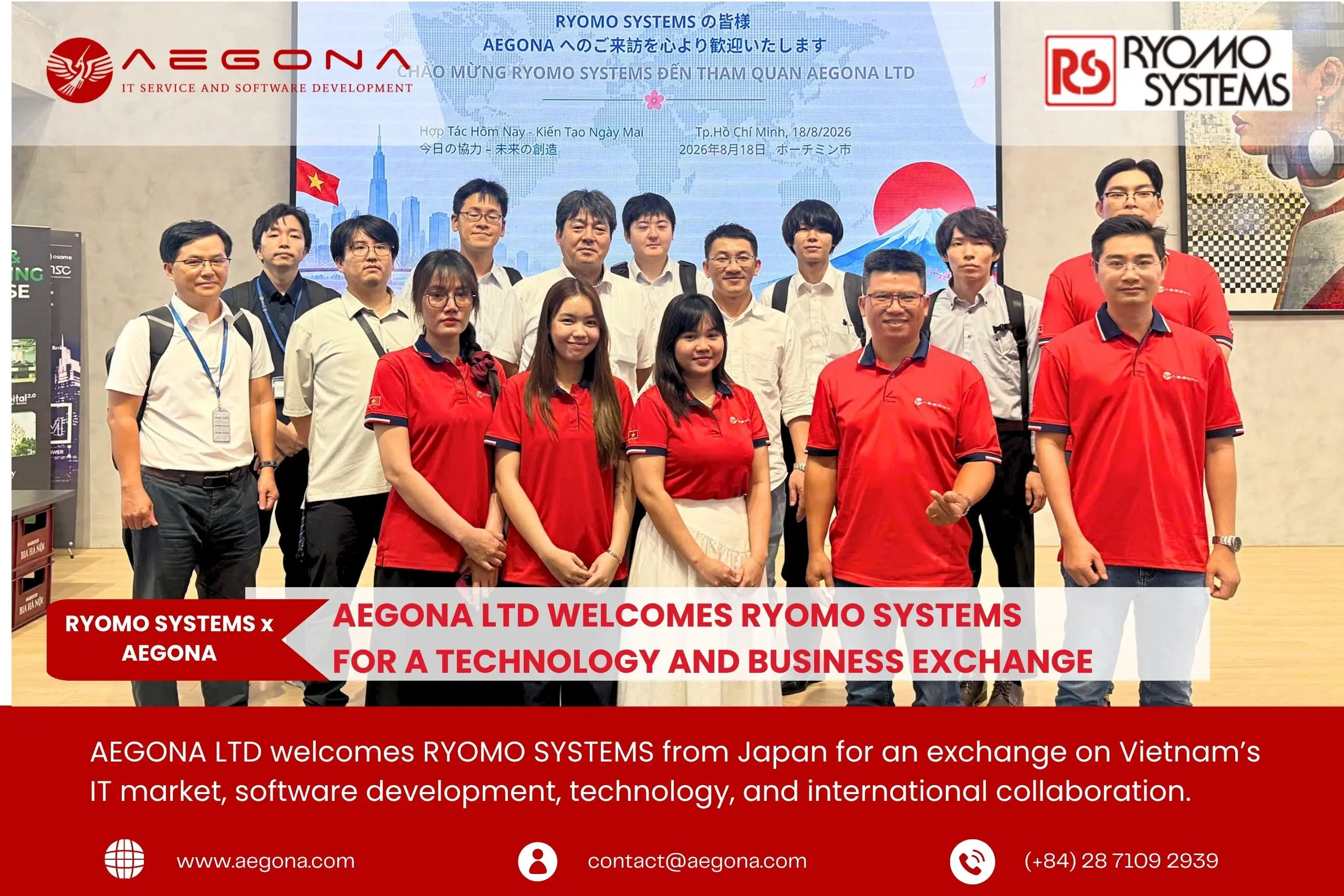
AEGONA welcomes RYOMO SYSTEMS from Japan for an exchange on Vietnam’s IT market, software development, technology, and international collaboration.

AI-powered legacy application modernization services in Vietnam. Aegona helps businesses refactor, migrate, and modernize legacy systems faster.

Hire experienced Java Backend Developers at Aegona to build scalable, secure, and high-performance Enterprise Backend systems with flexible outsourcing models.

Outsource C/C++ Developers in Vietnam with Aegona to access skilled talent, scale your team flexibly, accelerate development, and optimize costs.

Discover the top 5 software outsourcing companies in Vietnam (2026). Compare leading providers, their services, expertise, and find the right technology partner for your software development project.