Pioneering -
Innovative -
Creative


QTSC9, Quang Trung Software City, Trung My Tay Ward, Ho Chi Minh City, Vietnam


Inside 2026 IT Job Descriptions: How Enterprises Divide Work Between Engineers and AI
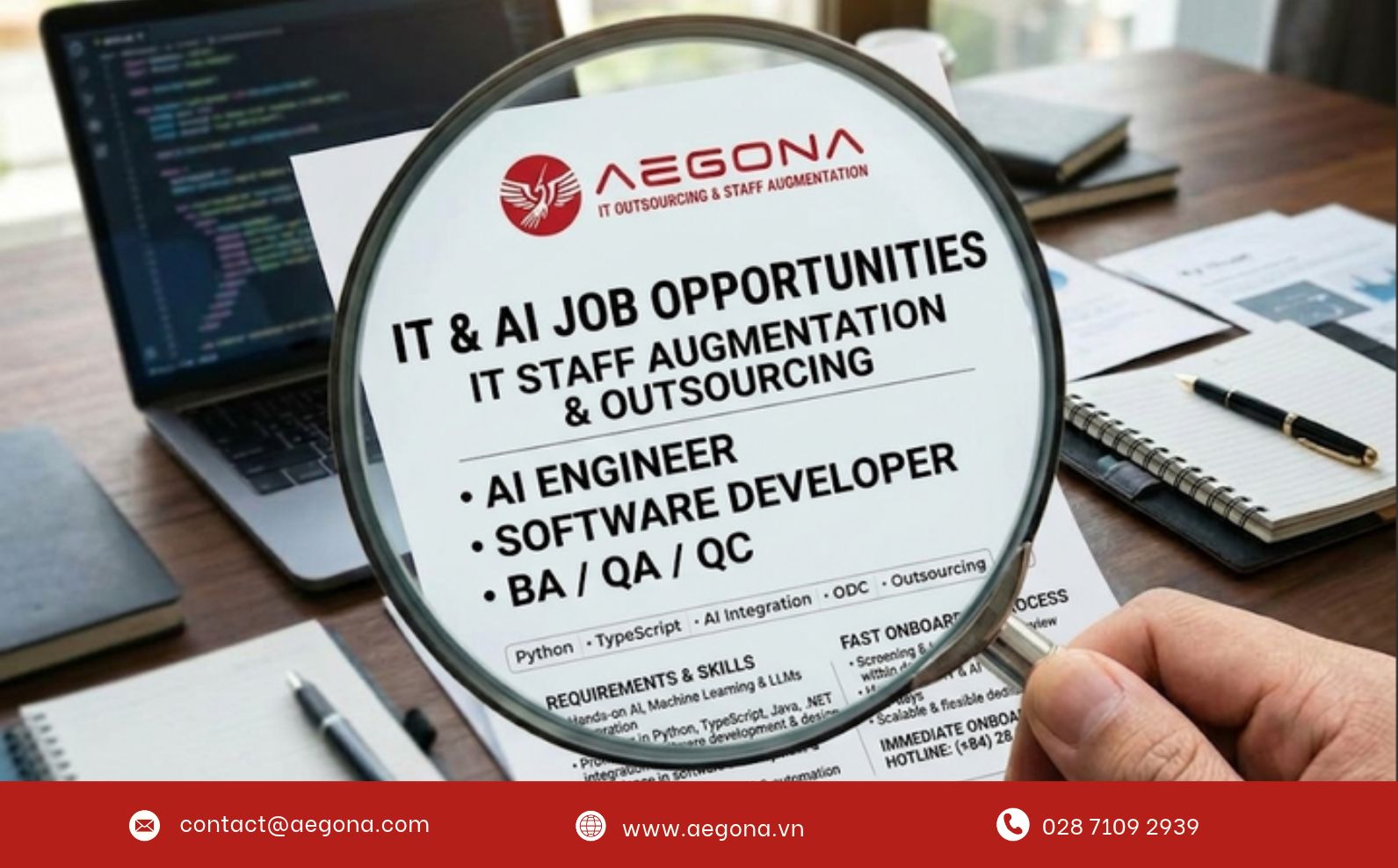
Skills in collaborating with AI Assistants and Context/Prompt Engineering are now appearing densely across technology job postings. However, software companies still strictly reserve a "no-go zone" exclusively for humans: System Architecture and Business Logic. Meanwhile, the software outsourcing market has rapidly shifted toward hiring specialists to integrate AI Agents, optimize RAG pipelines, and upgrade existing systems through API layers.
Join Aegona in exploring the analysis below, synthesized from four authoritative technology and workforce reports from 2025–2026: ITviec (surveying 846 IT leaders and professionals in Vietnam), the Stack Overflow Developer Survey (49,009 developers across 166 countries), GitHub Octoverse (data from 180+ million developers), and the Upwork Research Institute.
A New Division of Labor: Engineers Own Architecture & Business Logic, AI Grinds Out Boilerplate Code
Every Job Description (JD) in the Information Technology sector serves as a mirror reflecting how CTOs and Project Managers are restructuring the software development lifecycle (SDLC) and outsourcing workflows. The clearest picture today is a sharp division of roles between systems thinking (humans) and high-volume execution (AI).
| Allocation Criteria | Tasks Delegated to AI | Tasks Controlled by IT Engineers |
|---|---|---|
| Job Requirements | Generating boilerplate code, creating synthetic data, translating programming languages, summarizing documentation. | Designing system architecture, analyzing business logic, auditing security, optimizing performance. |
| Actual Adoption Rate | 54% searching for technical solutions;
36% generating synthetic testing data;
31% writing technical documentation. | 76% of engineers retain control over Deployment & Monitoring;
69% retain control over project planning. |
| Output Reliability | Generates hundreds of code variations in minutes but is prone to hidden logic bugs. | Only 5.4% of IT enterprises in Vietnam fully trust AI output without human review. |
(Data sources: Stack Overflow Developer Survey & ITviec Vietnam AI Adoption Report)
This boundary demonstrates a clear reality: Enterprises use AI to free developers from repetitive tasks, but decisions governing data flows and system security must remain in the hands of battle-tested engineers.
The Software Industry Thirsts for AI Application Talent While Scaling Back Mass Hiring
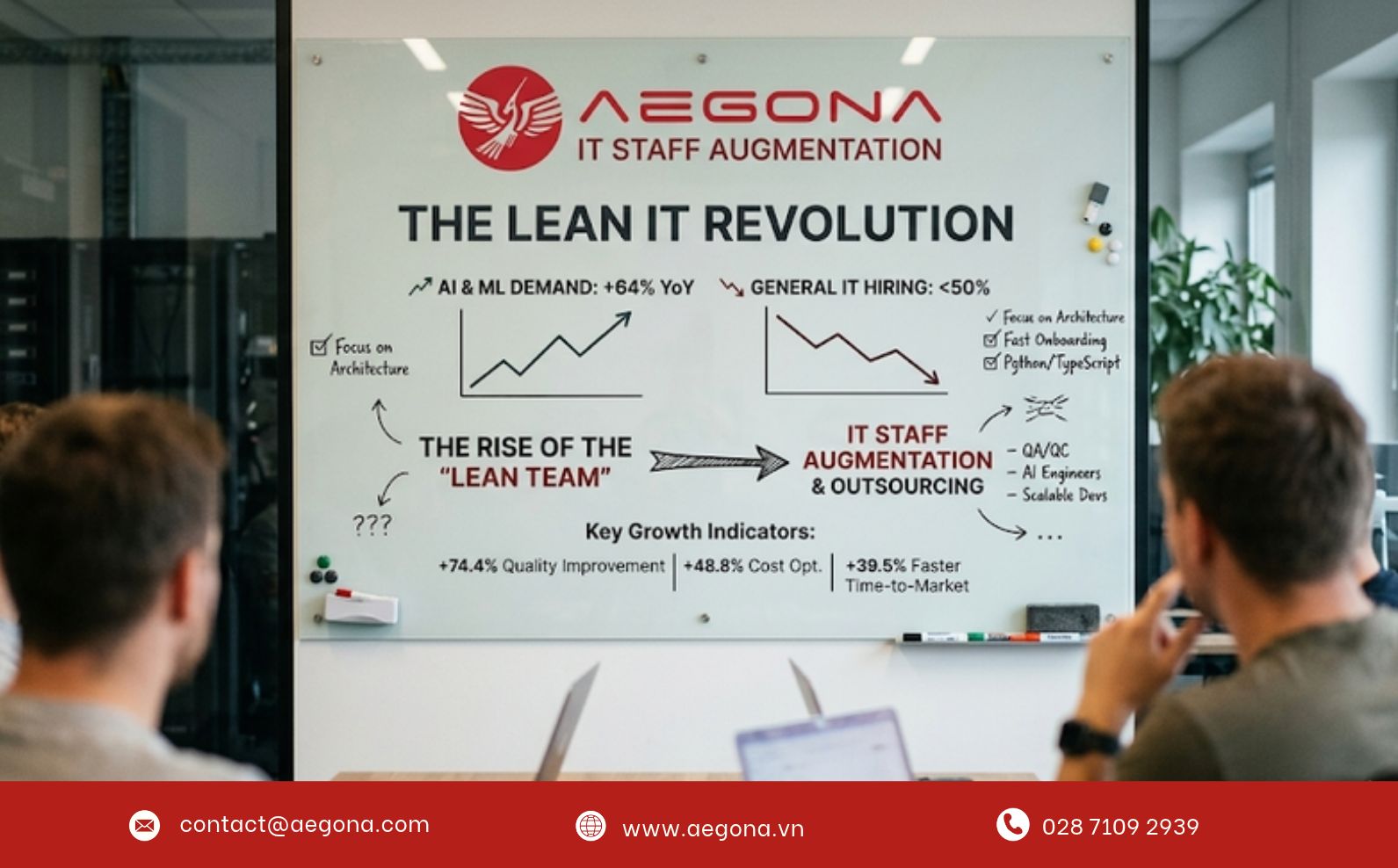
According to the Stack Overflow survey, 84% of developers worldwide have integrated AI tools into their workflows, with 51% of professional engineers using them daily. In Vietnam, data from ITviec records a 64% year-over-year (YoY) surge in job postings for Data/AI/ML roles, driving demand for Python up by 70% and SQL up by 54%.
However, the market is witnessing a major paradox: Demand for technological upgrades is soaring, but permanent headcount budgets are tightening. For the first time since 2021, the percentage of IT companies in Vietnam planning mass recruitment expansions has dropped below 50%.
Instead of maintaining a bloated team just to slice UI templates (HTML/CSS), write basic CRUD functions, or run manual tests, enterprises now prioritize maintaining a Lean Team combined with [IT Staff Augmentation services] to scale resources flexibly across project phases.
This hybrid approach—combining high-caliber human talent with AI tools—has delivered three clear growth indicators for technology enterprises in Vietnam:
74.4% of enterprises directly improved software product and service quality.
48.8% significantly optimized system operation and development costs.
39.5% shortened their time-to-market.
From "Writing Code" to "Context Engineering": AI Toolkits Go Straight into JDs
In current job descriptions for Developers, Business Analysts (BAs), and QA/QC engineers, vague requirements like "familiarity with AI" have been eliminated. Instead, recruiters explicitly name specialized tools and Context Engineering skills (designing and controlling system context for AI models).
Coding Assistants & LLMs: ChatGPT leads adoption (82%), followed by GitHub Copilot (68%) and Google Gemini (47%). Notably, Claude Code and AI-native IDEs (such as Cursor) have captured 41% market share among engineers building AI Agents thanks to their ability to comprehend entire project codebases. According to GitHub Octoverse, 80% of new developers activate Copilot within their very first week on the job.
DevSecOps & QA Automation: Automation runtime via GitHub Actions increased by 35% YoY (reaching 11.5 billion minutes). Applying AI and automated scanning tools like Dependabot helps engineering teams cut the time required to patch critical security vulnerabilities by 30% (dropping from an average of 37 days to 26 days).
Notably, ITviec's report highlights that IT job postings requiring English proficiency increased by 52% YoY (and surged 87% quarter-over-quarter). When working with Large Language Models (LLMs), English proficiency combined with a BA’s analytical mindset (writing structured User Stories, Acceptance Criteria, and Business Rules) acts as a "high-level programming language" that directly determines the quality of machine-generated code.
Three Software Outsourcing & AI Integration Trends Enterprises Must Grasp
The software outsourcing market is always the most sensitive barometer of enterprise cost-efficiency demands. A report from the Upwork Research Institute reveals that demand for AI skills surged by 109%—with Prompt Engineering alone rising by 93%—pushing hourly rates for AI specialists 40% to 44% higher than the general market average.
Below are three technical trends reshaping how enterprises commission software development services:
Trend 1: Upgrading Existing Systems via AI Integration Layers (Modular AI & RAG)
Instead of tearing down and rebuilding entire ERP, CRM, or E-commerce platforms at a cost of tens of thousands of dollars, enterprises prioritize [AI integration and modular software upgrades] via API gateways. The most common business use cases include:
Building RAG (Retrieval-Augmented Generation) systems that enable AI Chatbots to advise customers or look up internal procedures with 100% accuracy based on the company's proprietary knowledge base.
Integrating intelligent virtual assistants into Zalo Mini Apps and Admin Portals, or automating payment reconciliation and e-invoice issuance workflows.
Trend 2: Containerizing AI Agents and the Dominance of TypeScript
According to GitHub Octoverse, repositories using Dockerfiles grew by 120% YoY and Jupyter Notebooks increased by 75% YoY, driven by the need to sandbox isolated environments for autonomous AI Agents. Simultaneously, TypeScript officially surpassed both Python and JavaScript to become the #1 language on GitHub (+66.6% YoY in contributors). TypeScript's strict type system serves as an essential technical guardrail that catches AI-generated bugs before code is pushed to Production.
Trend 3: The Divide Between Rapid "Vibe Coding" Prototypes and Robust Software Engineering
Prompt-to-UI generation tools (such as v0, Lovable, and Bolt) make it possible to spin up a Prototype or MVP in just a few hours. However, 72% of professional developers confirm they do not use "Vibe Coding" (writing code entirely via prompts without understanding the underlying architecture) for long-term commercial systems. Enterprises increasingly need seasoned engineers to refactor, secure, and maintain large-scale platforms.
The AI-Era Staffing Dilemma: In-House Hiring vs. IT & AI Staff Augmentation?
Facing the AI wave, IT recruiters find themselves in a catch-22: On one hand, 62.5% of companies now use AI to screen resumes (per ITviec); on the other hand, thousands of candidates also use AI to polish their profiles and pass basic algorithmic tests. Accurately evaluating whether an engineer truly commands system architecture—or merely relies on tools—has become remarkably difficult and costly.
To accelerate product development without inflating fixed payroll overheads, many organizations have pivoted from traditional in-house recruitment to specialized [IT and AI Engineer Staff Augmentation services].
Comparison: Traditional In-House Hiring vs. IT & AI Staff Augmentation
| Evaluation Criteria | Traditional In-House Hiring | IT & AI Staff Augmentation Services |
|---|---|---|
| Time-to-Hire | Takes 45 – 90 days to post jobs, screen CVs, interview, and wait for notice periods. | Only 3 – 7 days to onboard pre-vetted engineers with proven project experience. |
| AI & Code Competency Verification | Hard to assess in 1–2 interviews; high risk of hiring AI-dependent candidates who create "technical debt." | Talent is pre-screened through real-world projects: strong system architecture, mastery of AI tools, and standardized QA/QC processes. |
| Operating Costs | High expenses for recruitment, insurance, benefits, hardware, and turnover disruptions. | Saves 30% – 45% in overhead costs; pay strictly for actual time and deliverables. |
| Team Scalability | Difficult to downsize after project completion or quickly source niche experts (AI/RAG, DevSecOps). | Easily scale up or scale down team size—from Developers, BAs, and QA/QC to AI Engineers—at any project stage. |
Battle-Tested IT & AI Staffing Solutions for Enterprises
Rather than letting projects stall for months due to a shortage of qualified talent, IT Staff Augmentation (Onsite/Offshore) and Dedicated AI Teams provide enterprises with a plug-and-play workforce ready to hit the ground running:
AI & System Integration Engineers (AI/ML Engineers): Specialized in LLM integration, internal RAG architecture, omnichannel AI Chatbots, and smart API connections into existing CRM, ERP, Zalo Mini App, and E-commerce platforms without disrupting ongoing operations.
Full-Cycle Software Engineering Teams (Full-Stack Dev, Mobile, BA, QA/QC, PM): Professionals who not only leverage modern AI toolkits to double execution speed, but also possess sharp business acumen, adhere to structured WBS (Work Breakdown Structure) methodologies, and guarantee zero-technical-debt deliverables.
Need to rapidly onboard AI Engineers or a dedicated software development team to accelerate your project?
Explore our Competency Profile and get a tailored team structure consultation at: [IT Staff Augmentation & Custom Software Development Solutions].
Frequently Asked Questions (FAQ)
Can AI completely replace software developers in 2026?
No. According to data from Stack Overflow and ITviec, although 84% of developers use AI to speed up boilerplate coding and testing, only 5.4% of enterprises fully trust AI output without human oversight. Human engineers remain indispensable for designing system architecture, handling complex business logic, and ensuring data security.Why should enterprises hire external AI engineers and IT staff instead of recruiting in-house?
Recruiting an in-house AI Engineer or Senior Developer takes an average of 2 to 3 months with substantial salary and benefit overheads. IT Staff Augmentation enables businesses to onboard pre-vetted talent within 1 week, optimize operating costs by up to 40%, and flexibly scale team size according to project milestones.Do enterprises need to rebuild their legacy software from scratch to adopt AI?
Not at all. The most cost-effective approach today is a Modular Upgrade via API integration layers and RAG technology. AI engineers can attach an intelligent data-processing "brain," automate reporting, or embed virtual assistants directly into your existing CRM, ERP, or Website with high security and a fraction of the cost of a full rebuild.
Contact Aegona for Consultation:
AEGONA LTD – IT Service & Software Development
[P] +84 28 7109 2939 (08:00 – 17:00, Mon – Fri)
[M] +84 914 518 869 | +84 869 731 689
[W] www.aegona.vn | www.aegona.com
[Zalo] https://bit.ly/41UeXrx
[HQ - Lab 1] Orbital Building (QTSC Building 9), Quang Trung Software City, Ho Chi Minh City, Vietnam
[Lab 2] QTSC 1 Building, Quang Trung Software City, Ho Chi Minh City, Vietnam
related post
Explore Moodle LMS E-learning, its features, benefits, limitations, and use cases. Learn when a custom LMS solution from Aegona may better fit your needs.
Wix is a user-friendly website builder that helps you create, customize, and manage professional websites without coding using drag-and-drop tools and ready-made templates.
Learn how to integrate Google Pay, Apple Pay, and payment gateways into your website. Explore payment API integration, security, and online payment solutions with Aegona.
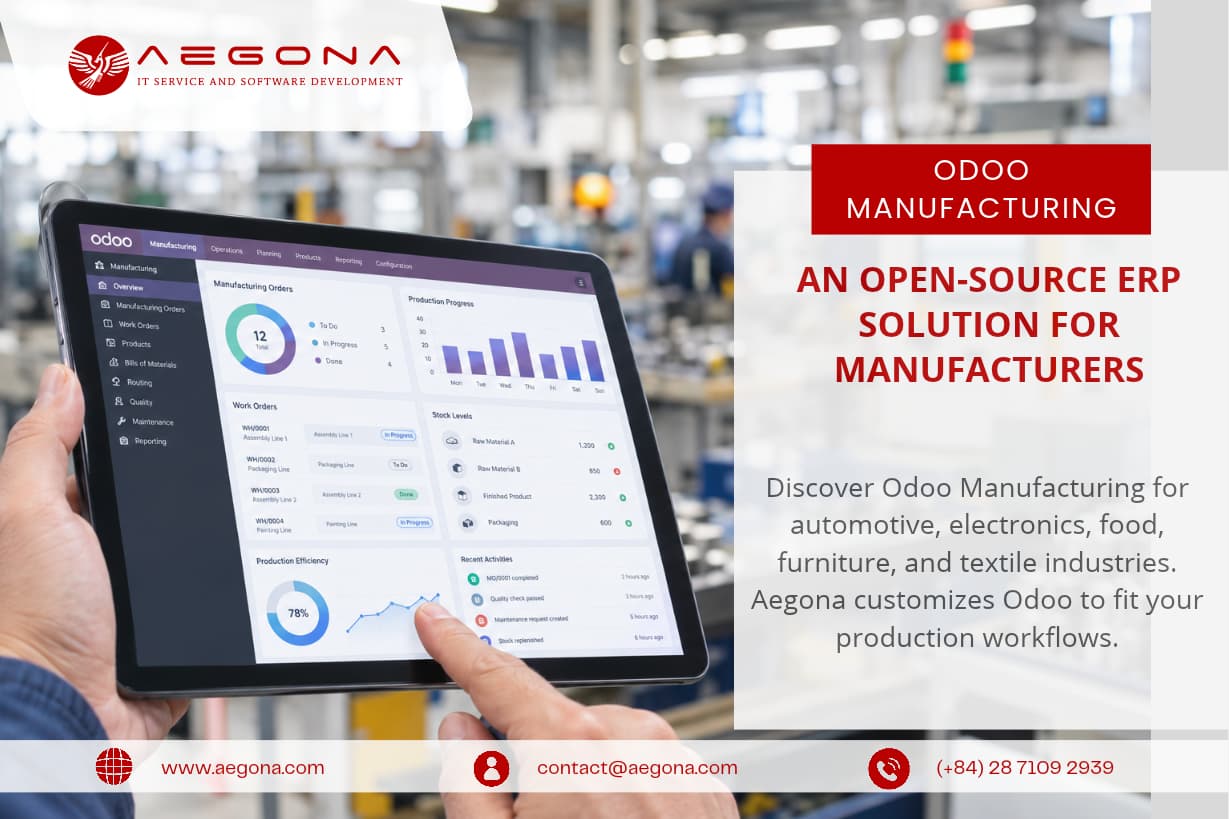
Discover Odoo Manufacturing for automotive, electronics, food, furniture, and textile industries. Aegona customizes Odoo to fit your production workflows.

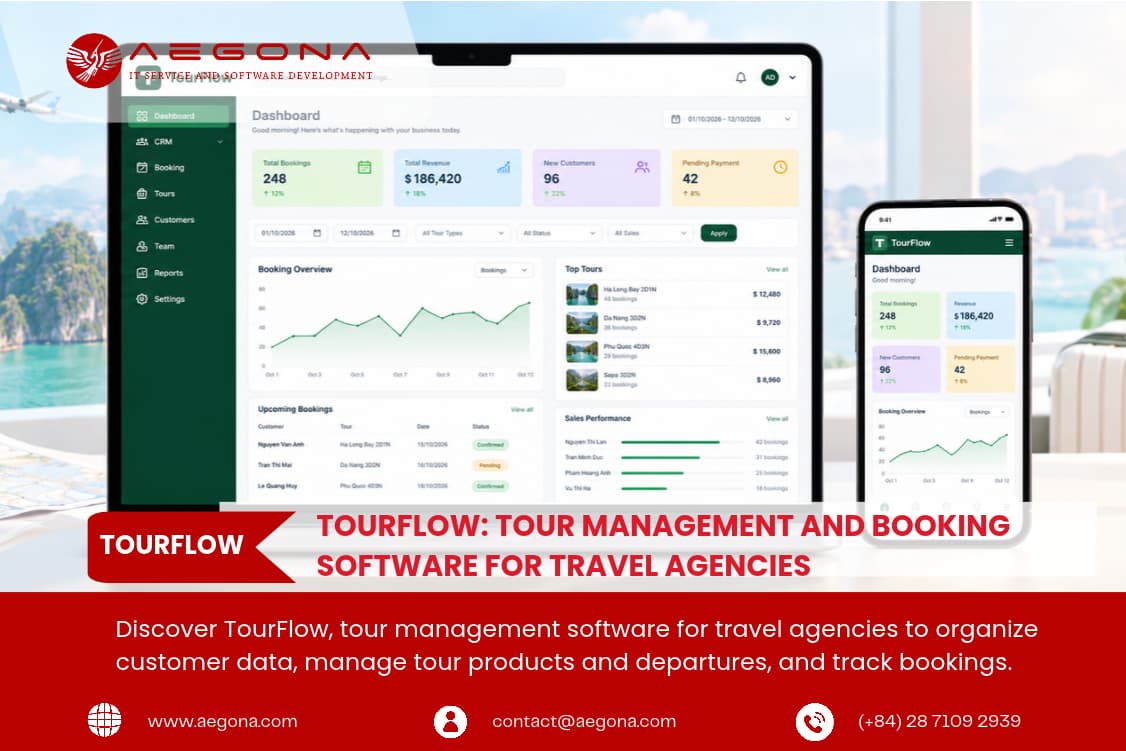
Discover TourFlow, tour management software for travel agencies to organize customer data, manage tour products and departures, and track bookings.
OpenAI Ads brings a new advertising opportunity to ChatGPT. Explore how ChatGPT Ads work and what businesses should know about advertising in the AI era.
Shopify website design and development tailored to your business, with custom themes, integrations, features, and maintenance.
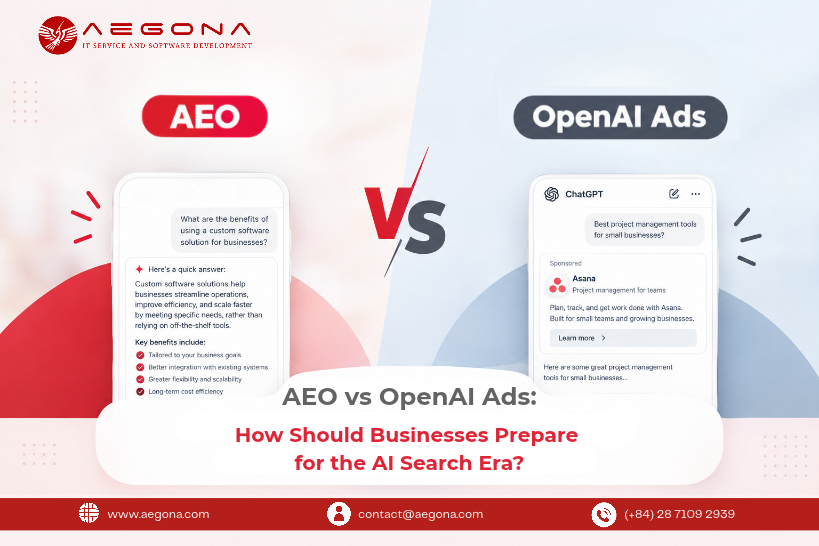
AEO vs OpenAI Ads: discover the difference between AI Search optimization and ChatGPT advertising, and what businesses should consider in the AI era.
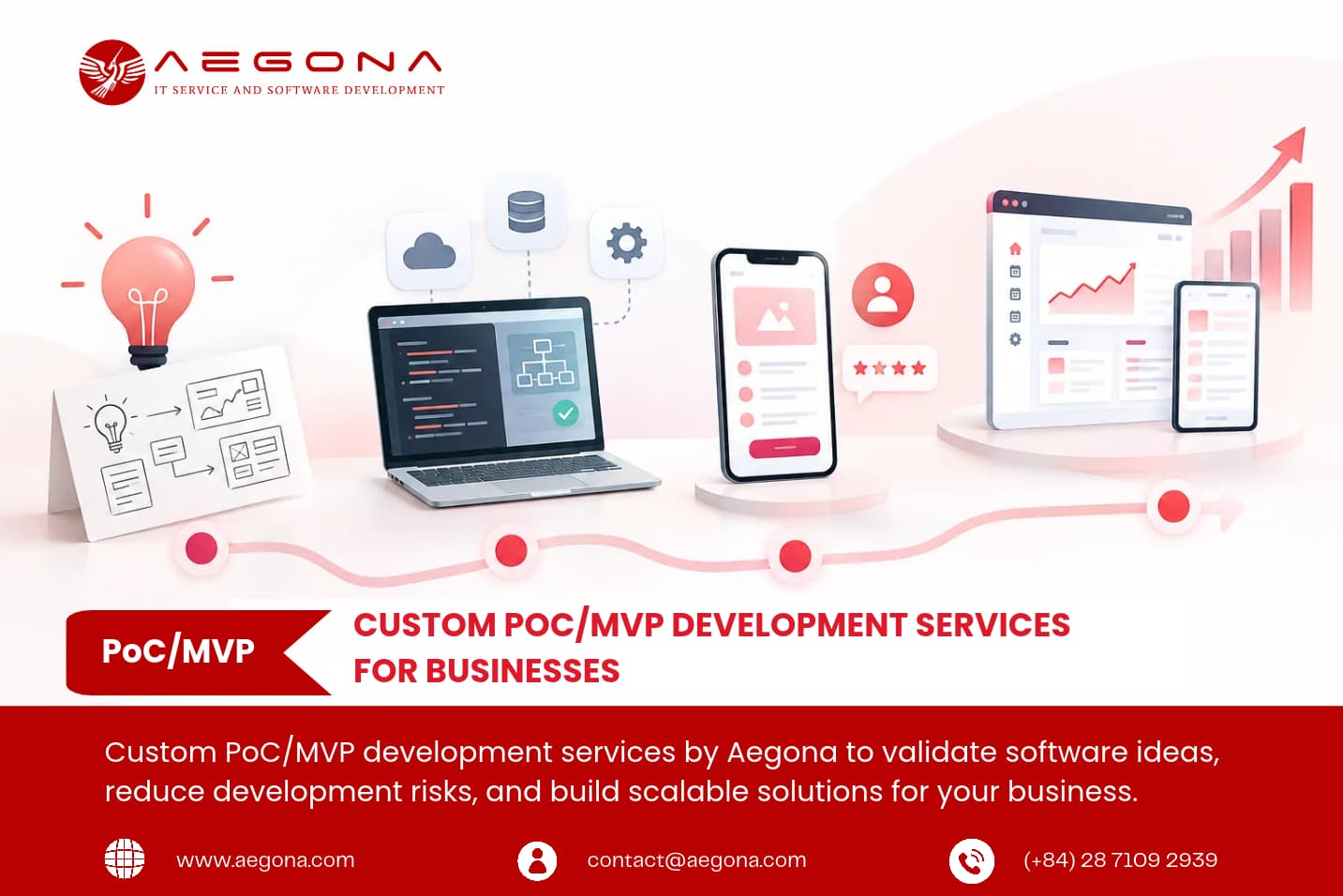
Custom PoC/MVP development services by Aegona to validate software ideas, reduce development risks, and build scalable solutions for your business.
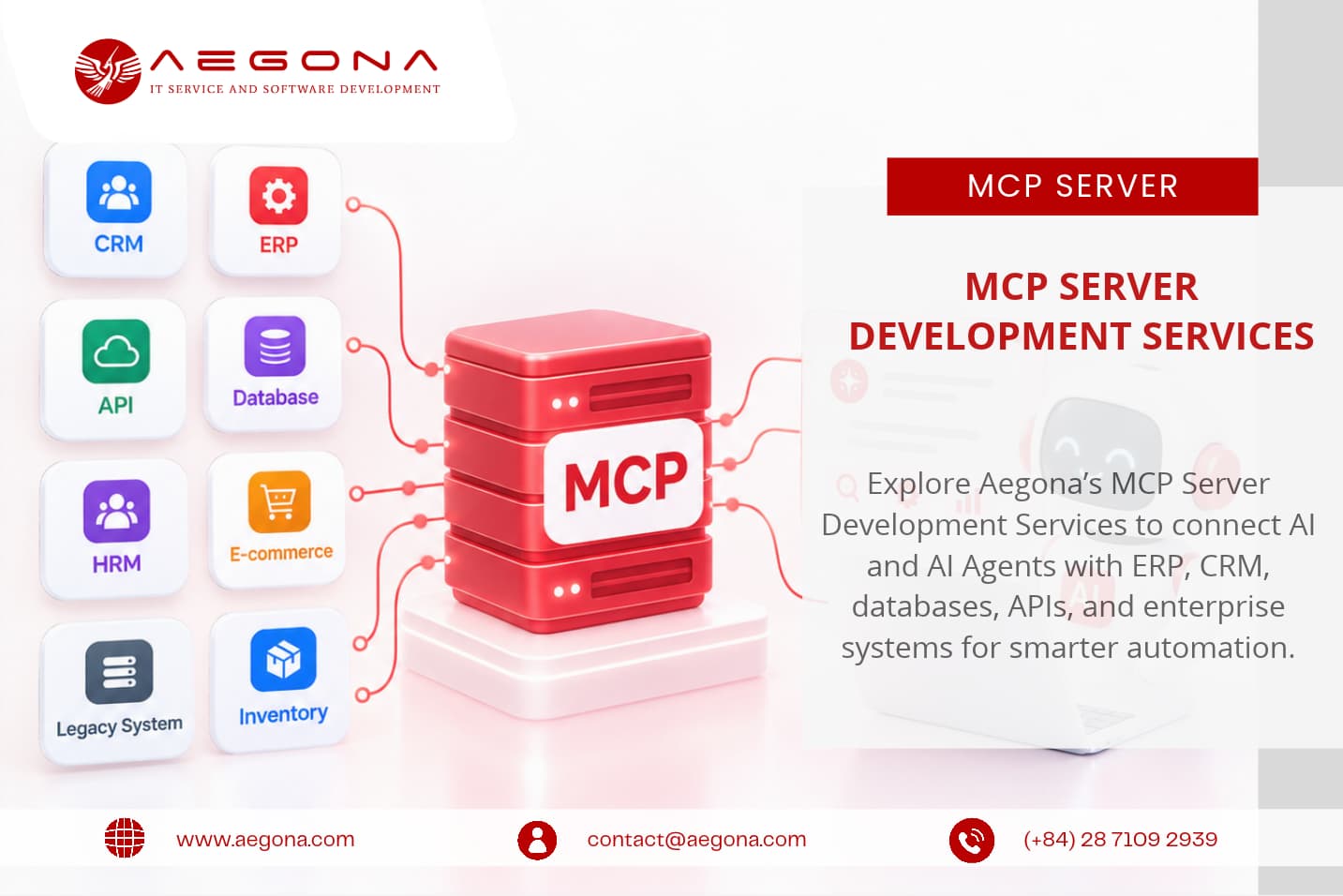
Explore Aegona’s MCP Server Development Services to connect AI and AI Agents with ERP, CRM, databases, APIs, and enterprise systems for smarter automation.
Scale your development team with Aegona’s Staff Augmentation Services. Hire skilled Java, PHP, Fullstack Developers in Vietnam for your projects.
AEGONA provides Odoo ODC services with flexible models, including Dedicated Odoo Developer, Dedicated Odoo Team, and Full Odoo ODC.