Pioneering -
Innovative -
Creative


QTSC9, Quang Trung Software City, Trung My Tay Ward, Ho Chi Minh City, Vietnam


Odoo Manufacturing: An Open-Source ERP Solution for Manufacturers
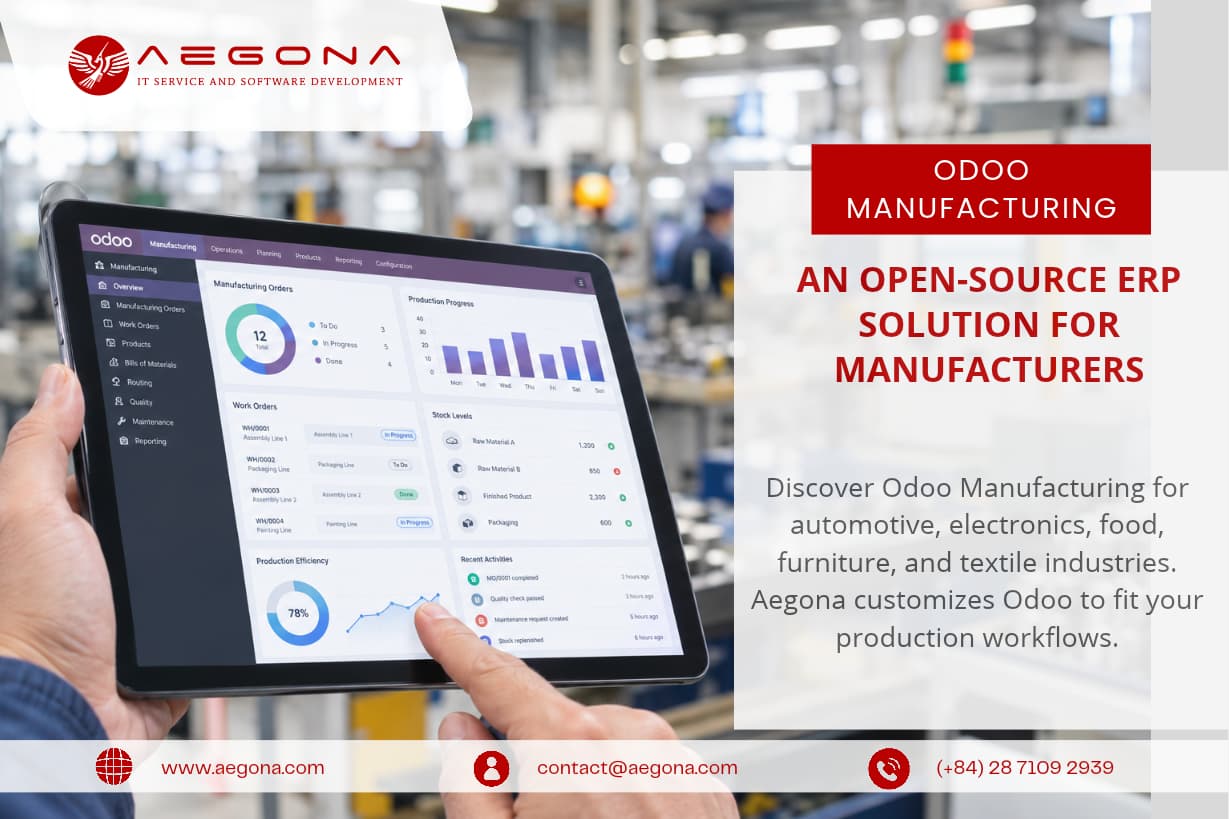
Are you running a manufacturing business where production plans still live in spreadsheets, inventory records rarely match actual stock, and work orders are managed through paper documents or verbal instructions? These challenges are common among small and medium-sized manufacturers. Odoo Manufacturing, also known as Odoo MRP, offers a practical way to bring production planning, material management, work orders, quality control, maintenance, and cost analysis together in one system. As an open-source manufacturing management software solution, Odoo can also be customized to better fit your business processes.
What is Odoo Manufacturing?
Odoo Manufacturing is a manufacturing management module within the Odoo ERP ecosystem. It helps businesses plan production, manage bills of materials (BOMs), coordinate manufacturing orders, monitor shop floor operations, control product quality, maintain equipment, and analyze production performance.
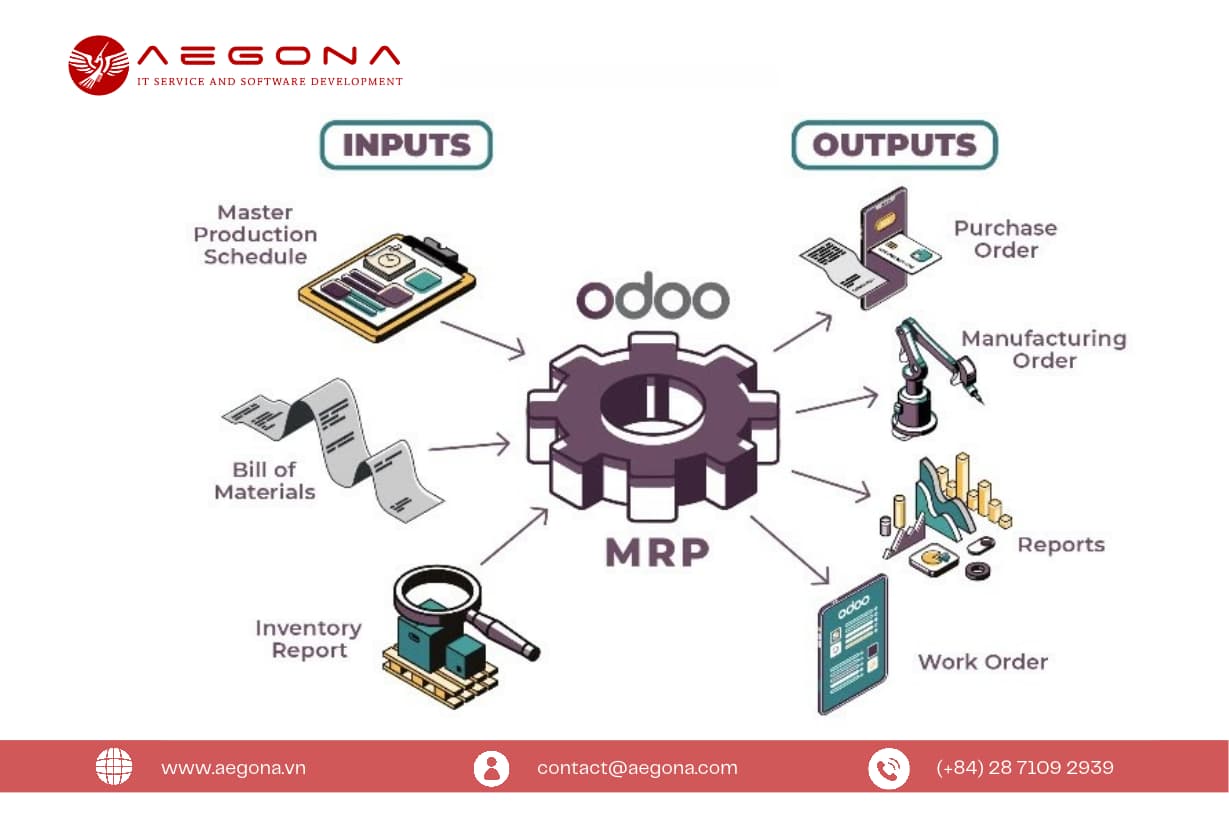
One of the key advantages of using Odoo as a manufacturing ERP system is its ability to connect data across departments. Sales, purchasing, inventory, accounting, and manufacturing can work with shared information instead of maintaining separate records. For example, a confirmed sales order can trigger replenishment rules or manufacturing requirements, while completed production orders update finished goods inventory. This reduces duplicate data entry and helps teams work with more consistent information.
Why choose an open-source manufacturing solution?
An open-source manufacturing solution can offer several advantages for businesses looking to improve operational efficiency:
- Flexible business processes: Customize workflows, data fields, reports, and modules to meet specific production requirements.
- Integration capabilities: Connect manufacturing operations with inventory, accounting, sales, and internal business applications through suitable integration methods.
- Scalable implementation: Start with essential functions and expand the system as production needs become more complex.
- Greater control over system development: Work with a software development team to adapt the solution to your actual operations rather than relying entirely on standard features.
Key features of Odoo Manufacturing
Odoo Manufacturing provides a range of tools for managing production activities. Available features depend on the Odoo version, edition, configuration, and installed applications, allowing businesses to select an implementation scope that matches their needs.
1. Manufacturing management
Odoo helps businesses manage manufacturing orders and track production activities from planning through completion.
- Manufacturing Orders (MOs): Create and manage orders for assembly, production lines, and other manufacturing processes.
- Work Orders: Break manufacturing orders into individual operations and assign them to specific work centers.
- Barcode Support: Scan products, lots, or serial numbers and record production activities directly on the shop floor, depending on the configured workflow.
- Repair Management: Support repair operations for returned, defective, or service-related products through the relevant Odoo applications.
- Flexible Manufacturing Orders: Adjust material consumption and order details when actual production requirements differ from the original plan, subject to system configuration and permissions.
- Unbuild Orders: Disassemble finished products and return recoverable components to inventory when needed.
These capabilities help production teams maintain clearer records, improve coordination, and respond to changes more effectively.
2. Production scheduling and planning
Effective production planning helps manufacturers balance customer demand, available materials, and production capacity.
Odoo provides tools to organize manufacturing schedules, monitor work orders, and plan activities around available resources. Depending on the setup, planners can review work-center schedules, adjust production timing, and identify potential material shortages before they affect delivery commitments.
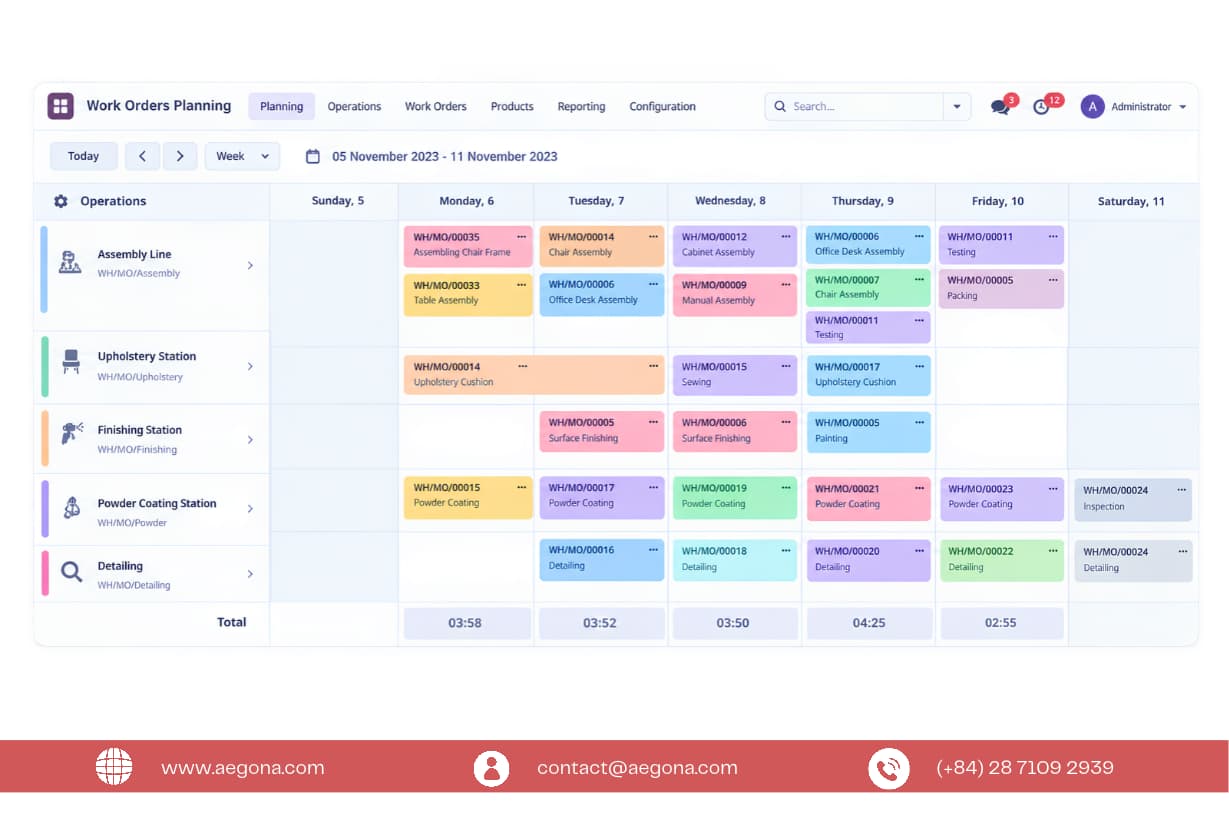
Key capabilities include:
- Production Scheduling: Organize manufacturing activities and adjust schedules based on operational requirements.
- Work Center Capacity: Consider available machine capacity and work-center schedules when planning production.
- Material Availability: Coordinate manufacturing requirements with inventory and replenishment activities.
- Master Production Schedule (MPS): Support medium-term planning by comparing expected demand with forecast production and supply.
- Manufacturing Performance Monitoring: Use relevant operational data, including OEE where configured, to identify capacity constraints and improvement opportunities.
These tools can help production and sales teams align their plans and reduce the risk of overcommitting to orders.
3. Flexible manufacturing data
Accurate product and production data form the foundation of an effective manufacturing ERP system.
Odoo supports flexible manufacturing structures that can accommodate products with multiple components, production stages, and configurations.
- Multi-Level Bill of Materials (BOM): Define finished products that contain subassemblies, which may have their own components and material requirements.
- Routing: Specify the sequence of operations required to manufacture a product.
- Product Variants: Manage product options such as size, color, and material where supported by the configured product structure.
- Manufacturing Kits: Define component sets for specific sales, inventory, or assembly workflows.
With a properly configured multi-level BOM, businesses can calculate material requirements more accurately and gain better visibility into the components needed at each production stage.
4. Product lifecycle management (PLM)
Product specifications and engineering documents often change throughout a product's lifecycle. Without proper version control, production teams may accidentally work with outdated information.
Odoo PLM provides tools to manage engineering changes and product documentation, including:
- Comparing product or bill of materials revisions.
- Managing Engineering Change Orders (ECOs) and tracking their approval progress.
- Maintaining relevant drawings, instructions, and technical documents alongside manufacturing data.
- Helping teams coordinate engineering changes before applying them to production.
These capabilities are especially useful for manufacturers whose products undergo frequent design updates or require strict document control.
5. Quality control
Consistent product quality depends on having clear inspection procedures and reliable records at the right stages of production.
With Odoo Quality, businesses can configure quality checks and control points for relevant manufacturing or inventory operations.
Key capabilities may include:
- Quality Control Points: Trigger inspections at designated stages or operations.
- Quality Checks: Record inspection results and identify products that do not meet specifications.
- Statistical Process Control (SPC): Support process monitoring through suitable configurations or integrations where required.
- Quality Alerts: Record defects, assign responsibility, and track corrective actions.
By incorporating quality checks into daily operations, manufacturers can identify issues earlier and reduce the risk of defective products reaching customers.
6. Equipment maintenance
Unplanned equipment downtime can disrupt production schedules, increase operating costs, and delay deliveries.
Odoo Maintenance helps businesses organize preventive and corrective maintenance activities through features such as:
- Scheduling preventive maintenance based on defined criteria.
- Recording corrective maintenance requests when equipment problems occur.
- Monitoring maintenance activities and equipment status.
- Tracking indicators such as Mean Time Between Failures (MTBF), where supported by the reporting setup.
A structured maintenance process helps manufacturers plan servicing more effectively and improve equipment reliability over time.
7. Shop floor interface for operators
The Shop Floor interface provides a practical way for production operators to interact with manufacturing orders and work orders directly from a computer or tablet.
Depending on the Odoo edition and configuration, operators can use the interface to:
- Record production quantities and manufacturing progress.
- Access work instructions and relevant technical documents.
- Scan barcodes and record lot or serial number information.
- Start, pause, and complete assigned operations.
- Report scrap, quality issues, or other production problems.
- Follow required quality checks during manufacturing.
Businesses can also explore integrations with barcode printers, measurement equipment, and other shop floor devices. Additional hardware or an IoT solution may be needed depending on the equipment and integration requirements.
8. Manufacturing reporting and analysis
Manufacturing reports help managers understand production costs, identify bottlenecks, and make decisions based on operational data.
Odoo can support several areas of analysis:
- Traceability: Track relevant lot and serial number information to identify the components used in a finished product, subject to the traceability records maintained.
- Manufacturing Order Cost Analysis: Review material consumption and other recorded production costs to evaluate manufacturing expenses.
- Overall Equipment Effectiveness (OEE): Monitor equipment effectiveness where the required data and reporting tools are available.
- Production Performance: Review manufacturing progress, resource utilization, and production issues to identify opportunities for improvement.
These insights help businesses move beyond basic production tracking toward more informed operational planning.
How does Odoo Manufacturing work from planning to delivery?
A typical workflow using Odoo MRP may include the following steps:
- Set up master data: Define products, bills of materials (including multi-level BOMs), work centers, routing, and supplier information.
- Capture demand: Receive production requirements from sales orders, forecasts, or the Master Production Schedule.
- Plan production: Calculate material requirements, review available inventory, and create manufacturing orders or replenishment proposals as needed.
- Purchase and receive materials: Confirm purchase orders and record incoming materials, including lot or serial number details when required.
- Release manufacturing orders: Confirm production orders and organize work orders for the relevant work centers.
- Execute production: Operators follow work instructions, record progress, scan barcodes, and report completed quantities through the configured shop floor workflow.
- Perform quality checks: Record inspection results and raise quality alerts when issues occur.
- Complete production: Register finished goods in inventory and review the manufacturing costs recorded by the system.
- Deliver products and invoice customers: Coordinate finished goods availability with sales, delivery, and accounting processes.
- Review performance: Analyze production costs, scrap, traceability records, and OEE where available to identify areas for improvement.
The exact workflow depends on the manufacturer's processes and the Odoo applications selected for implementation.
>>>Read more: Odoo ODC Services in Vietnam: Build a Dedicated Odoo Development Team
Which Odoo modules can be integrated with manufacturing?
Odoo Manufacturing can work with other applications in the Odoo ecosystem to connect production data with related business operations.
Odoo Module or System | Role in Manufacturing |
Odoo Inventory | Manage raw materials, work-in-progress items, and finished goods |
Odoo Purchase | Coordinate purchasing activities and replenish required materials |
Odoo Quality | Organize inspections, quality checks, and quality alerts |
Odoo Maintenance | Manage equipment maintenance requests and schedules |
Odoo PLM | Control engineering changes and product revisions |
Odoo Sales | Connect customer orders with production requirements based on the configured workflow |
External Systems | Integrate accounting software, websites, barcode solutions, and internal applications through suitable APIs or other technical methods |
The appropriate combination depends on the company's business processes, existing technology, and operational priorities. A well-planned implementation can help reduce data silos and improve coordination between departments.
Which industries can benefit from Odoo Manufacturing?
Businesses should consider Odoo implementation for manufacturing if they experience challenges such as:
- Production plans and material records are managed through spreadsheets, paper documents, or disconnected systems.
- Material shortages and capacity constraints frequently cause delivery delays.
- Calculating production costs by manufacturing order or finished product is difficult.
- Customers require traceability for raw materials, batches, or finished products.
- Products have multiple variants, complex assemblies, or multi-level BOMs.
- The business needs an open-source manufacturing management software solution that can be adapted to its own workflows.
Odoo Manufacturing may be suitable for a wide range of industries, including:
- Mechanical engineering and machinery manufacturing
- Furniture and woodworking
- Electrical and electronics manufacturing
- Packaging and plastics
- Food and beverage production
- Garment and textile manufacturing
- Industrial equipment manufacturing
- Make-to-order and assembly-based production
However, the suitability of Odoo depends on the complexity of the production environment, required integrations, regulatory requirements, and the available features in the selected edition.
Aegona: Odoo customization and development services for manufacturers
Every factory has its own production workflows, material coding standards, costing methods, and reporting requirements. Successful Odoo implementation therefore involves more than installing software. It requires a clear understanding of existing operations, appropriate system configuration, targeted customization, and effective user training.
Aegona provides Odoo implementation, customization, and software development services to help businesses adapt Odoo to their operational needs.
Our services can include:
- Business Process Assessment: Review production workflows and recommend a phased implementation roadmap.
- Odoo Manufacturing Configuration: Configure BOMs, routing, work centers, production planning, quality control, and maintenance according to the project scope.
- Custom Module Development: Extend standard functionality and develop reports for specific manufacturing requirements.
- System Integration: Connect Odoo with existing accounting software, websites, internal applications, and other business systems.
- Data Migration and Training: Support data preparation, migration, user onboarding, and post-deployment assistance.
If your business is looking for a flexible manufacturing ERP solution, contact Aegona to discuss your requirements and explore an Odoo solution tailored to your production processes.
Visit aegona.com to learn more about our services.
Frequently asked questions about Odoo Manufacturing
Is Odoo manufacturing free?
Odoo offers both the open-source Community edition and the licensed Enterprise edition. The availability of manufacturing features varies by edition and version. Some advanced capabilities or related applications, such as certain PLM, Quality, Shop Floor, or planning functions, may require Enterprise or additional configuration.
Businesses should review their functional requirements before selecting an edition. Implementation, customization, integration, training, and ongoing support may also involve additional costs.
Does Odoo support multi-level BOMs?
Yes. Odoo supports multi-level bills of materials, allowing a finished product to contain subassemblies with their own components. When configured correctly, this structure helps businesses calculate material requirements across multiple production levels.
Does the Shop Floor interface require special equipment?
A compatible computer or tablet with a web browser may be sufficient for basic shop floor operations. Barcode scanners, label printers, measurement devices, or an IoT solution may be needed for more advanced workflows, depending on the equipment and integration requirements.
How long does Odoo implementation take for a manufacturing business?
The timeline depends on the number of modules, production sites, business processes, customization requirements, data quality, and integration scope. A relatively straightforward project may take several weeks to a few months, while more complex manufacturing environments may require a longer implementation period.
A phased rollout can help businesses prioritize essential functions, introduce the system gradually, and expand its capabilities over time.
Conclusion
Odoo Manufacturing provides tools to help businesses manage manufacturing orders, material requirements, quality control, maintenance, and production performance within a connected ERP environment. With the right configuration and customization, it can support manufacturers in improving operational visibility and coordinating activities across departments.
The first step toward a successful implementation is understanding your current production processes and identifying the functions that will deliver the most value. Contact Aegona to discuss your requirements and explore an Odoo Manufacturing solution tailored to your business.
Contact us for today:
AEGONA LTD – IT Service & Software Development
[E] [email protected]
[P] 028 7109 2939 (08:00 – 17:00, Mon – Fri)
[M] 0914 518 869 | 0869 731 689
[W] www.aegona.vn | www.aegona.com
[Zalo] https://bit.ly/41UeXrx
[HQ-Lab1] Orbital Building (QTSC Building 9), Quang Trung Software City, Ho Chi Minh City, Vietnam
[Lab 2] QTSC 1 Building, Quang Trung Software City, Ho Chi Minh City, Vietnam
related post

Discover TourFlow, tour management software for travel agencies to organize customer data, manage tour products and departures, and track bookings.

OpenAI Ads brings a new advertising opportunity to ChatGPT. Explore how ChatGPT Ads work and what businesses should know about advertising in the AI era.
Shopify website design and development tailored to your business, with custom themes, integrations, features, and maintenance.
AEO vs OpenAI Ads: discover the difference between AI Search optimization and ChatGPT advertising, and what businesses should consider in the AI era.

Custom PoC/MVP development services by Aegona to validate software ideas, reduce development risks, and build scalable solutions for your business.
Explore Aegona’s MCP Server Development Services to connect AI and AI Agents with ERP, CRM, databases, APIs, and enterprise systems for smarter automation.
Scale your development team with Aegona’s Staff Augmentation Services. Hire skilled Java, PHP, Fullstack Developers in Vietnam for your projects.
AEGONA provides Odoo ODC services with flexible models, including Dedicated Odoo Developer, Dedicated Odoo Team, and Full Odoo ODC.
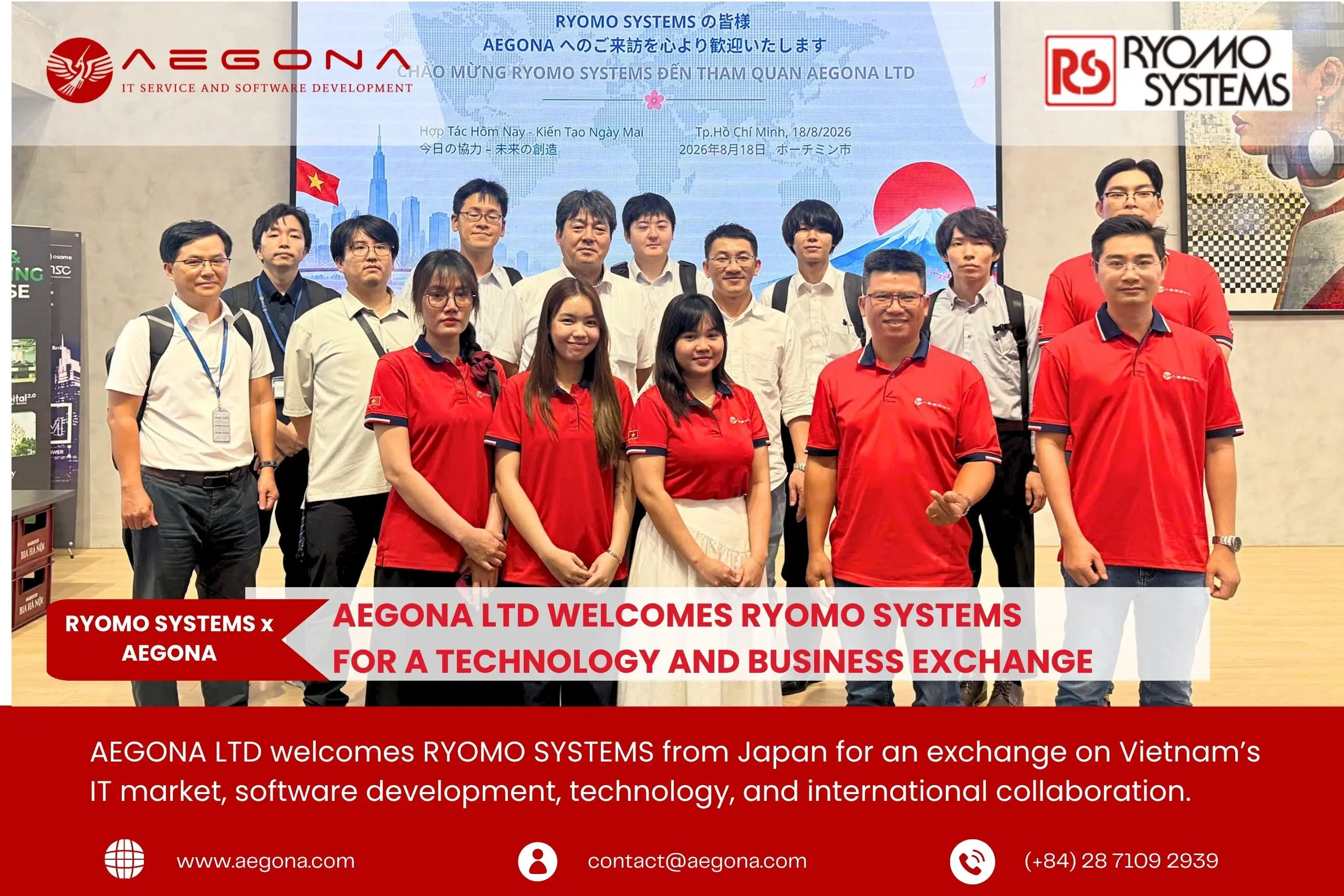
AEGONA welcomes RYOMO SYSTEMS from Japan for an exchange on Vietnam’s IT market, software development, technology, and international collaboration.
AI-powered legacy application modernization services in Vietnam. Aegona helps businesses refactor, migrate, and modernize legacy systems faster.
Hire experienced Java Backend Developers at Aegona to build scalable, secure, and high-performance Enterprise Backend systems with flexible outsourcing models.

Outsource C/C++ Developers in Vietnam with Aegona to access skilled talent, scale your team flexibly, accelerate development, and optimize costs.