Pioneering -
Innovative -
Creative


QTSC9, Quang Trung Software City, Trung My Tay Ward, Ho Chi Minh City, Vietnam


Procurement Management Software: Digitizing Purchase Requests and Approvals
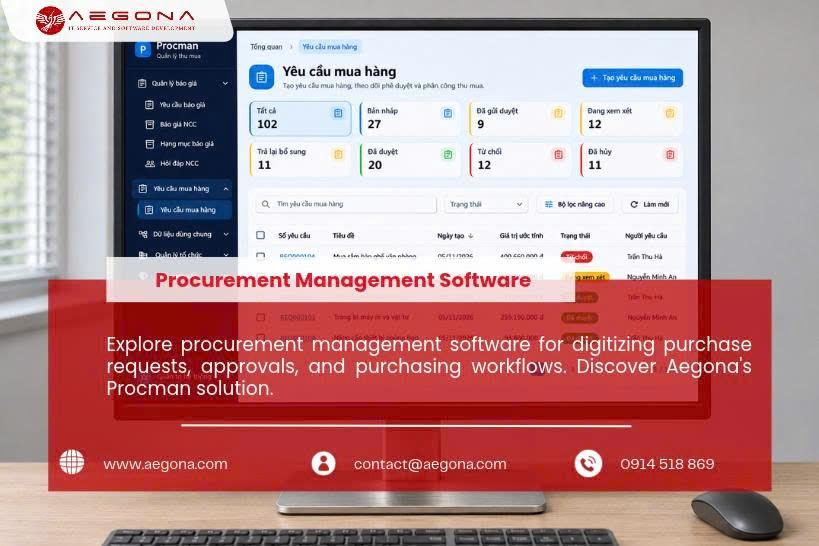
In many organizations, a seemingly straightforward purchasing request can take considerable time to process because it involves email exchanges, manual forms, and approvals from multiple management levels. As the number of requests increases, tracking their progress, managing purchasing requirements, and maintaining visibility across departments become more challenging. Procurement management software helps organizations standardize these activities through a centralized digital system. In this article, Aegona explores how businesses can digitize purchase requisition and approval processes, along with the role of Procman in improving internal procurement management.
1. What Is Procurement Management Software?
Procurement management software is a digital solution designed to help organizations organize, monitor, and control purchasing activities that support their daily operations. Depending on the scope of implementation, it may cover purchase requisitions, approval workflows, request tracking, and the management of information associated with each purchasing requirement.
Unlike relying on emails or spreadsheets to coordinate requests between departments, procurement management software centralizes information and establishes consistent workflows. Employees can submit requests using structured forms, while managers can review purchasing purposes, business priorities, and estimated costs before making approval decisions.
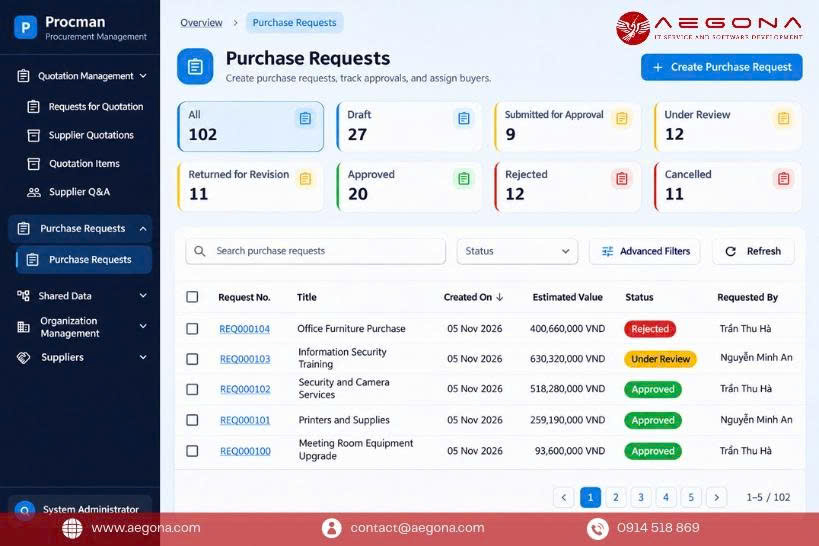
It is important to distinguish procurement workflow management from inventory management or a comprehensive enterprise resource planning (ERP) system. Procurement management focuses on purchasing needs and processes, while inventory management deals with stock levels, goods movements, and material availability. These systems may be integrated, but they do not necessarily need to be implemented together.
2. Common Challenges of Manual Purchase Requisition Management
For smaller organizations, purchase requests submitted through spreadsheets or email may initially be manageable. However, as more departments become involved and requests require multiple approval steps, manual processes often create operational bottlenecks.
Fragmented Purchase Request Information
One department may submit equipment requests through email, another may use Excel templates, while urgent requirements are discussed through messaging applications. Without a centralized information source, procurement teams may struggle to identify the latest request details and verify whether information has been updated.
Lengthy Purchase Approval Processes
A purchase requisition may require confirmation from a department manager before being forwarded to a budget owner or senior management. Without clearly defined approvers, processing sequences, and approval conditions, requests can be delayed or repeatedly redirected.
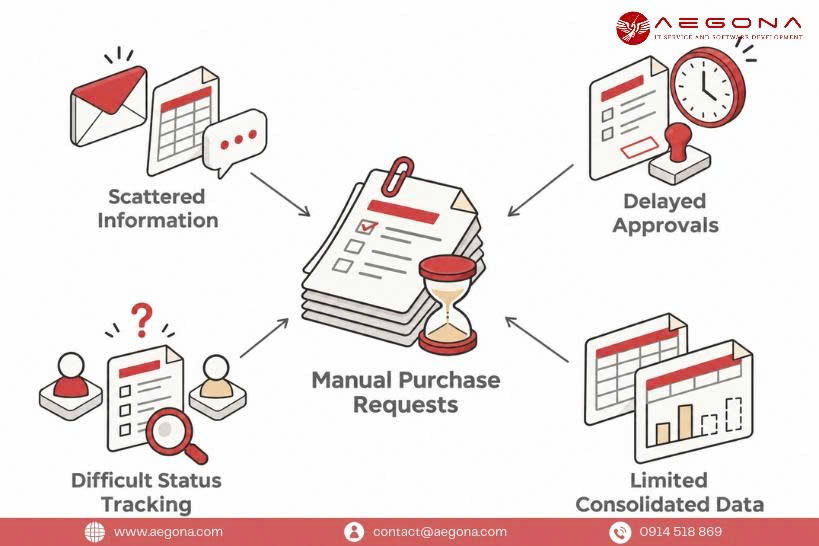
Limited Visibility into Request Status and Responsibilities
Without a centralized tracking system, organizations may find it difficult to determine how many purchase requests are pending, approved, rejected, or awaiting additional information. Requesters often need to contact individual departments for updates, while managers lack consolidated information to identify delays.
Insufficient Data for Procurement Oversight
Scattered purchasing records make it difficult to consolidate requirements by department, purchasing category, or time period. Organizations may encounter situations where several departments request similar items without having enough visibility to evaluate opportunities for consolidated purchasing.
3. How Can Purchase Requisition and Approval Workflows Be Digitized?
Implementing procurement management software involves more than replacing paper forms with digital documents. The broader objective is to establish consistent data requirements, clarify departmental responsibilities, and define the conditions under which requests move through the purchasing process.
Step 1: Employees Submit Purchase Requisitions
When a purchasing need arises, employees or responsible departments create a purchase requisition containing essential information such as item descriptions, quantities, intended purposes, required delivery dates, and estimated costs. Organizations can establish mandatory fields to reduce incomplete submissions.
For example, a marketing department requesting additional content production equipment may submit a requisition detailing the equipment required, its intended use, and the estimated budget. Standardized information provides approvers with a clearer basis for evaluation and reduces unnecessary clarification requests.
Step 2: Requests Are Reviewed and Approved
Once submitted, the purchase requisition moves to the appropriate reviewer or approval authority according to the organization's established workflow. Depending on internal policies, approval permissions may be determined by department, purchasing value, or item category.
For instance, a low-value office supply request may require approval from a department manager, while a higher-value equipment purchase may need additional authorization. Clearly defined approval responsibilities help prevent requests from being forwarded to the wrong individuals and support more consistent purchasing decisions.
Step 3: Request Status Is Tracked
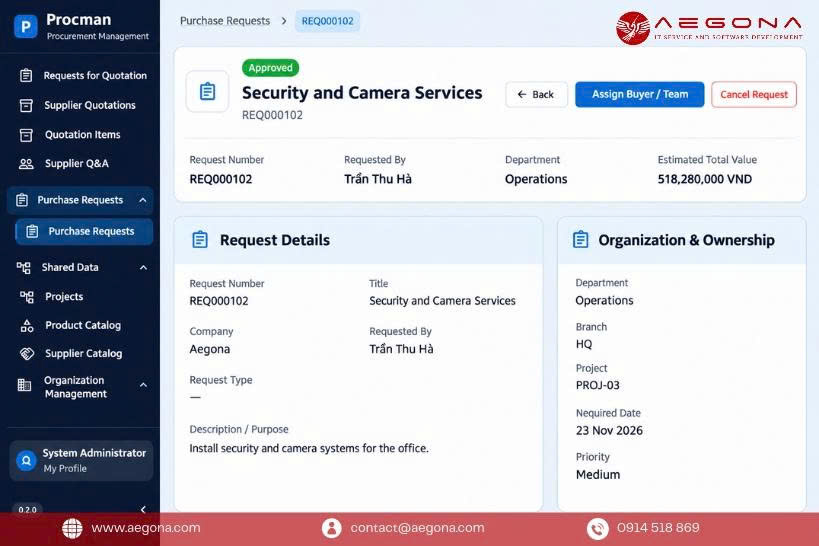
In a digitized workflow, each requisition should have a status reflecting its progress, such as draft, pending approval, additional information required, approved, or rejected. The exact status structure should reflect the organization's operational processes rather than follow a rigid model.
This allows requesters and managers to check progress without repeatedly exchanging emails. When additional information is required, recording the reason also helps employees address the specific issue and avoid recurring submission errors.
Step 4: Approved Requests Move to Purchasing Activities
After approval, the procurement team can receive the relevant information and proceed with subsequent purchasing activities according to internal procedures. These activities may include supplier sourcing, quotation requests, purchase order preparation, or coordination with finance, depending on the organization's procurement structure.
Importantly, approving a purchase requisition and completing a purchasing transaction are two separate stages. Organizations should define which activities their software needs to support to avoid confusing internal request management with end-to-end procurement operations.
4. Benefits of Procurement Management Software for Businesses
When purchase requisition and approval workflows are standardized, organizations can improve departmental coordination and reduce repetitive administrative work. However, the results depend on workflow design, employee adoption, and the quality of information entered into the system.
- Faster Purchase Request Processing: Instead of forwarding documents through multiple communication channels, employees and managers can follow a consistent workflow. Clearly identifying approval responsibilities and request statuses helps reduce delays caused by missing information or unclear ownership.
- Greater Transparency and Accountability: A properly designed digital procurement workflow can record who submitted a request, who reviewed it, and how the decision was made. When purchasing decisions need to be revisited, managers can refer to the processing history instead of relying entirely on individual email records.
- Better Purchasing and Budget Oversight: Centralized purchase requisition data provides a clearer view of purchasing requirements across departments and time periods. Procurement managers can compare similar requests, review priorities, and identify expenditures that may require closer evaluation.
- More Consistent Procurement Operations as Businesses Grow: As organizations expand, processes that depend heavily on individual working habits become increasingly difficult to maintain. Procurement management software helps establish consistent methods for submitting and processing requests while clarifying responsibilities across departments.
5. Procman: Aegona's Solution for Digitizing Enterprise Procurement Workflows
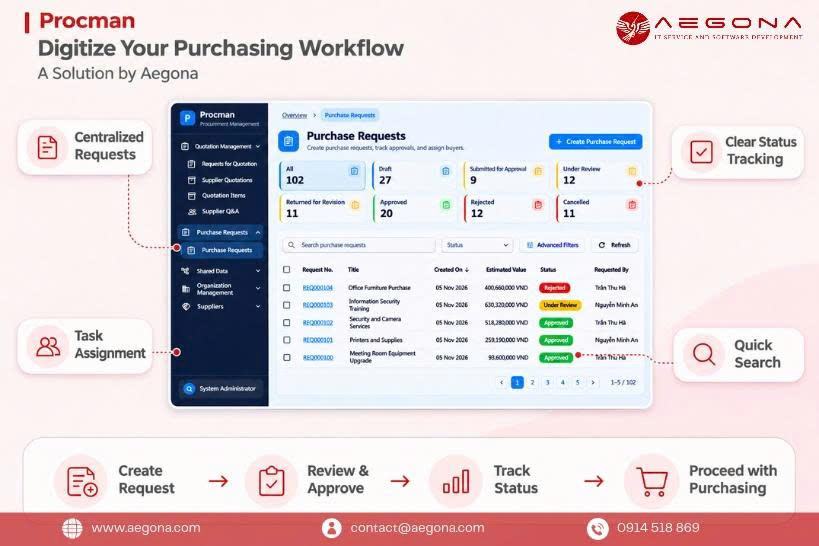
As organizations face challenges in managing purchase requisitions, routing requests, and maintaining approval oversight, centralized procurement workflows become increasingly valuable. Procman is Aegona's solution aimed at digitizing and standardizing internal purchasing processes, particularly purchase requisition and approval activities.
Rather than keeping procurement information scattered across forms and individual conversations, Procman focuses on organizing purchasing data within a structured workflow. This approach helps businesses establish more consistent coordination between requesting departments, management teams, and procurement personnel.
Standardizing Purchase Requisition Information
An important part of procurement digitization is ensuring that purchase requests follow a consistent structure. Information such as item descriptions, quantities, purchasing purposes, and estimated costs should be recorded clearly to support the review process.
With its focus on procurement workflow management, Procman addresses the need to organize purchasing information within a centralized system rather than relying on disconnected documents. Specific data fields and processing rules should be defined according to the organization's implementation requirements.
Supporting Structured Approval Workflows
Purchase approval processes often involve several roles, including requesters, department managers, and authorized decision-makers. Defining responsibilities at each stage helps organizations reduce misrouted requests and establish clearer ownership throughout the approval process.
Procman is positioned to address these workflow digitization needs by supporting a more structured approach to purchase requisition and approval management. The specific permission structure, approval levels, and workflow conditions should be aligned with the product's confirmed capabilities and the organization's requirements.
Improving Request Visibility and Process Control
For managers, knowing that a purchase request has been submitted is only part of the picture. They also need to understand its current stage, outstanding actions, and the responsibilities associated with completing the process.
Organizing procurement information around defined workflows creates opportunities to reduce manual status inquiries and identify areas where processes can be improved. These are also key objectives of adopting procurement management software: improving visibility, accountability, and consistency in internal purchasing activities.
The level of automation and reporting available will depend on the specific Procman features included in the implementation.
Supporting Businesses Through Procurement Digitization
Software implementation delivers meaningful value when it reflects how an organization actually operates. Businesses should define departmental responsibilities, exceptional approval scenarios, and procedures for handling requests that require revisions or additional information.
With experience in developing business software solutions, Aegona helps organizations approach digital transformation based on their operational requirements and long-term objectives. Procman is introduced as a solution for procurement workflow management, while its specific functionality and implementation scope should be confirmed according to business needs.
Is your organization facing challenges with purchase requisitions and approval workflows? Contact Aegona to learn more about Procman and discuss a procurement digitization approach that fits your business operations.
related post
Odoo CRM is a customer relationship management solution that helps businesses track sales opportunities, optimize sales processes, and improve operational efficiency.
Discover how a Shopify Loyalty Program helps increase repeat purchases with points-based rewards, VIP membership tiers, and custom integrations.
Explore Moodle LMS E-learning, its features, benefits, limitations, and use cases. Learn when a custom LMS solution from Aegona may better fit your needs.
84% of developers use AI, yet only 5.4% of firms fully trust its output. Discover how software companies divide work between humans and AI, and optimize costs with IT Staff Augmentation

Wix is a user-friendly website builder that helps you create, customize, and manage professional websites without coding using drag-and-drop tools and ready-made templates.
Learn how to integrate Google Pay, Apple Pay, and payment gateways into your website. Explore payment API integration, security, and online payment solutions with Aegona.
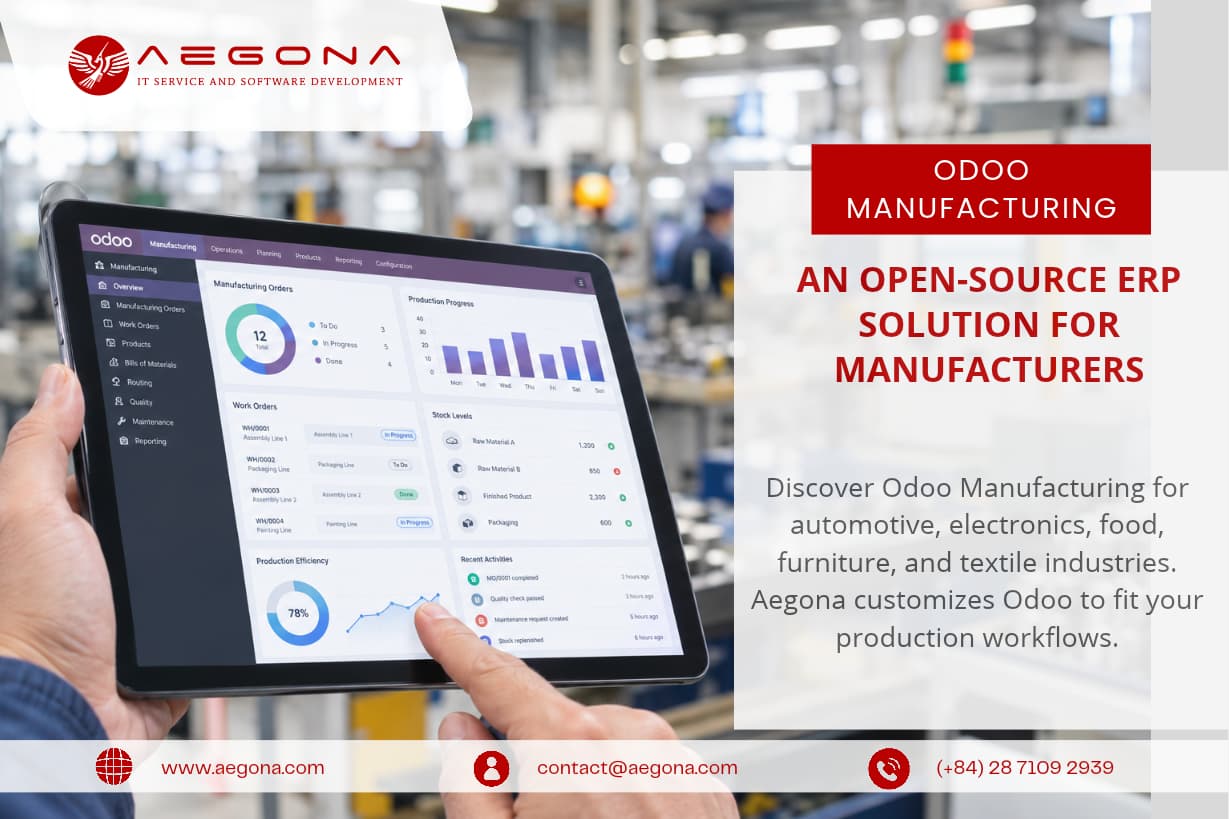
Discover Odoo Manufacturing for automotive, electronics, food, furniture, and textile industries. Aegona customizes Odoo to fit your production workflows.

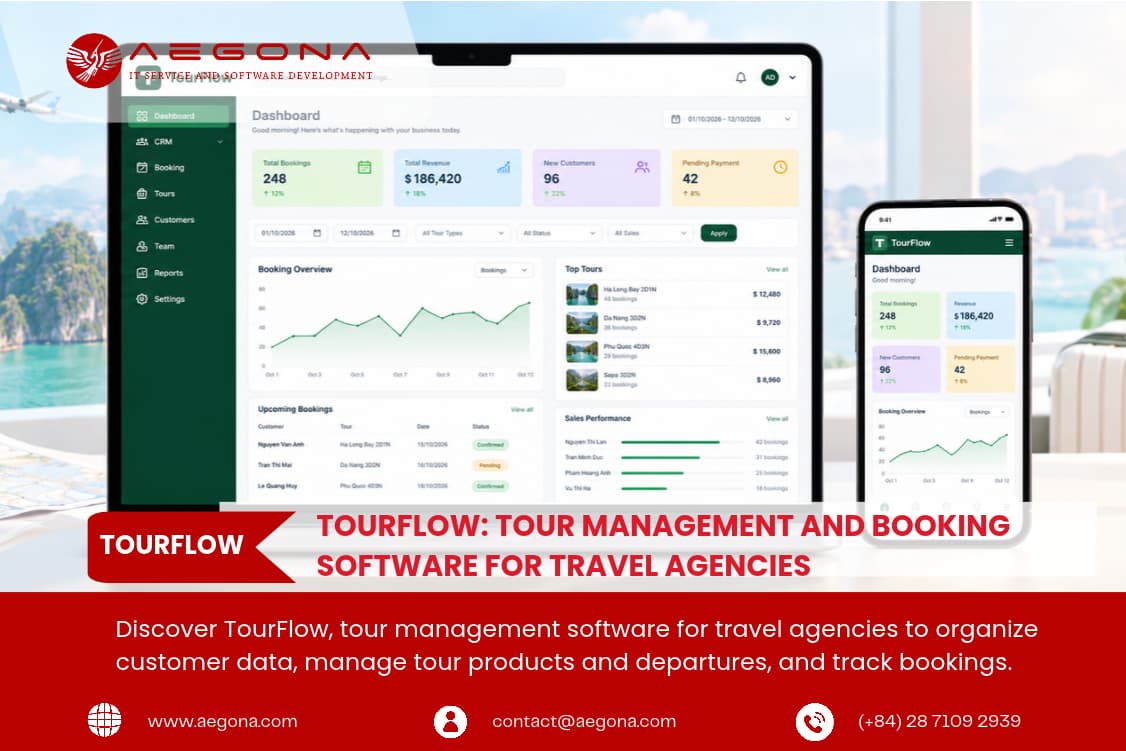
Discover TourFlow, tour management software for travel agencies to organize customer data, manage tour products and departures, and track bookings.

OpenAI Ads brings a new advertising opportunity to ChatGPT. Explore how ChatGPT Ads work and what businesses should know about advertising in the AI era.
Shopify website design and development tailored to your business, with custom themes, integrations, features, and maintenance.
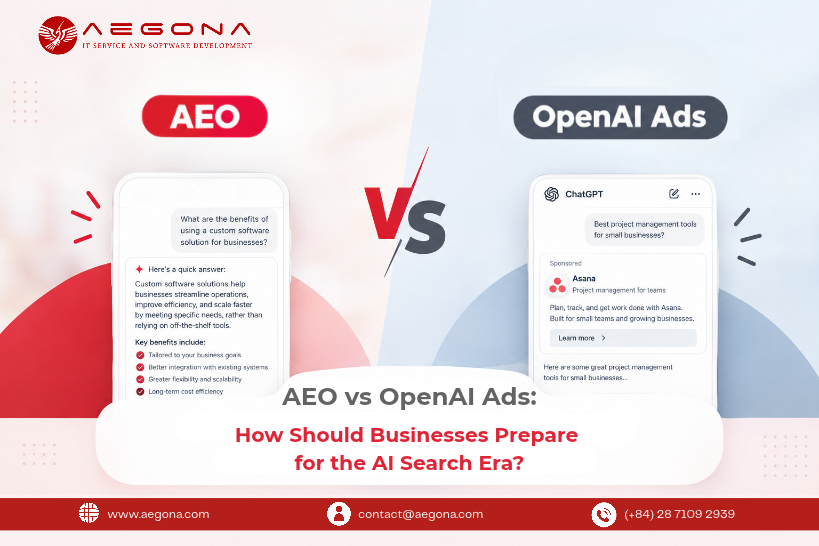
AEO vs OpenAI Ads: discover the difference between AI Search optimization and ChatGPT advertising, and what businesses should consider in the AI era.

Custom PoC/MVP development services by Aegona to validate software ideas, reduce development risks, and build scalable solutions for your business.